What Was Hitler's Secret Underground City? Project Riese Explained
Project Riese, the Nazi tunnelling programme under Ksiaz Castle and the Owl Mountains, explained, with what you can still visit today and which tours from Wroclaw cover it.
Project Riese, German for "Giant", was the codename for one of the largest and least explained construction programmes of the Second World War. Between 1943 and 1945 the Nazi regime drove tunnels, halls and shafts into the granite of the Owl Mountains in Lower Silesia, and beneath Książ Castle itself, at staggering human cost. The work was carried out by forced labourers held in subcamps of Gross-Rosen concentration camp. Thousands died. What the complex was actually for has never been settled.
The purpose of this page is to explain what was built, where, and what you can still walk through today. It also names the tours from Wrocław that visit the surviving sites, including the Wroclaw: Project Riese and Ksiaz Castle Private Tour, rated 4.8 across 42 reviews, from $198, with castle entry tickets included. Curiosity about the tunnels is the main reason travellers book these trips, and the sites repay that curiosity with a sober, well-documented story rather than a treasure hunt. Once the tunnels have satisfied your curiosity, the story of Walbrzych itself explains how a coal and porcelain town grew in the shadow of Ksiaz Castle.
What Was Hitler's Secret Underground City?
Project Riese was a Nazi construction codename covering seven underground complexes tunnelled into the Owl Mountains between 1943 and 1945, at Książ Castle, Osówka, Włodarz and other sites, built with forced labour from Gross-Rosen concentration camp subcamps. Nothing was finished, the purpose was never documented, and no Nazi gold train was ever found there.
The programme appears on the historical record as a cluster of underground sites in the hills around Wałbrzych and Jedlina-Zdrój, in what is now southwest Poland. The largest and best known are the tunnels under Książ Castle, the "underground city" at Osówka, and the vast Włodarz complex, alongside smaller workings at Rzeczka near Walim, Soboń, Jugowice and Głuszyca. Together they represent kilometres of corridors, reinforced with concrete, some with halls the size of churches, most of them abandoned mid-excavation when the war ended. The standard reference history of Project Riese records Albert Speer's Organisation Todt as the driving organisation behind the works.
What the sites were meant to become is genuinely unknown. Theories include a relocated Führer headquarters, underground armaments plants safe from Allied bombing, and storage for secret weapons programmes. No order specifying the purpose has surfaced in the archives. Historians agree on what is certain: the digging was real, the scale was enormous, and the workforce was largely made up of prisoners, forced labourers and prisoners of war who worked in brutal conditions with high death rates.
“Dieser Ausflug ist nur zu empfehlen! Ein zuverlässiger und sicherer Service sorgte für ein Erlebnis der besonderen Art.”
The "secret underground city" framing, popular in documentaries, is a reasonable description of Osówka in particular, whose network of concrete-lined halls and corridors is promoted today as an underground city. It is worth treating the more colourful claims with caution. The gold train legend that made Wałbrzych internationally famous rests on no verified find, and this site does not repeat it as fact. The verifiable history is grim enough, and the memorial sites present it that way.
For travellers, the practical reality is that two of the Riese sites, the Książ tunnels and Osówka, are open to visitors on regular guided routes, and both appear on day tours from Wrocław. The most reviewed option combining them with the castle is the Wroclaw: Project Riese and Ksiaz Castle Private Tour, roughly 7 to 8 hours, private, with hotel pickup in Wrocław and castle entry tickets included. If the wartime history is the core of your interest rather than the castle interiors, it is the natural first choice.
Where Exactly Was It Built?
The Riese sites sit in the Owl Mountains, roughly 70 km southwest of Wrocław, concentrated around Wałbrzych, Głuszyca and Jedlina-Zdrój, with the flagship tunnel complex drilled directly beneath Książ Castle, the largest castle in Silesia.
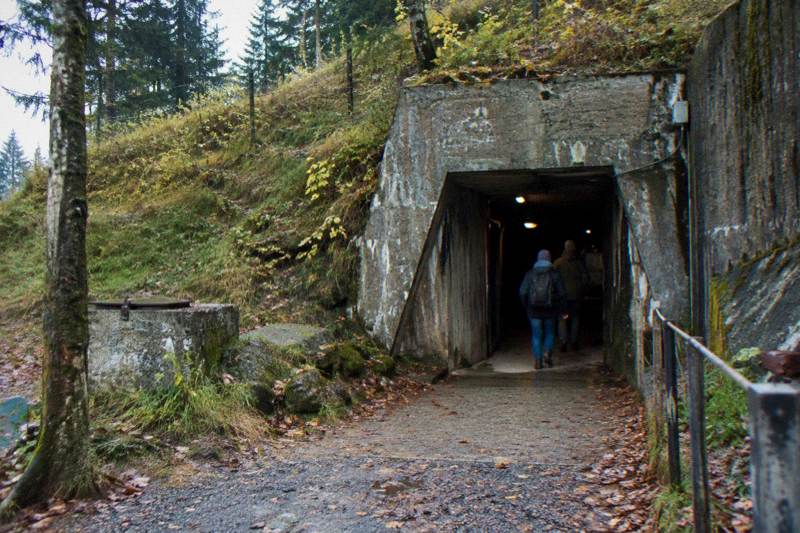
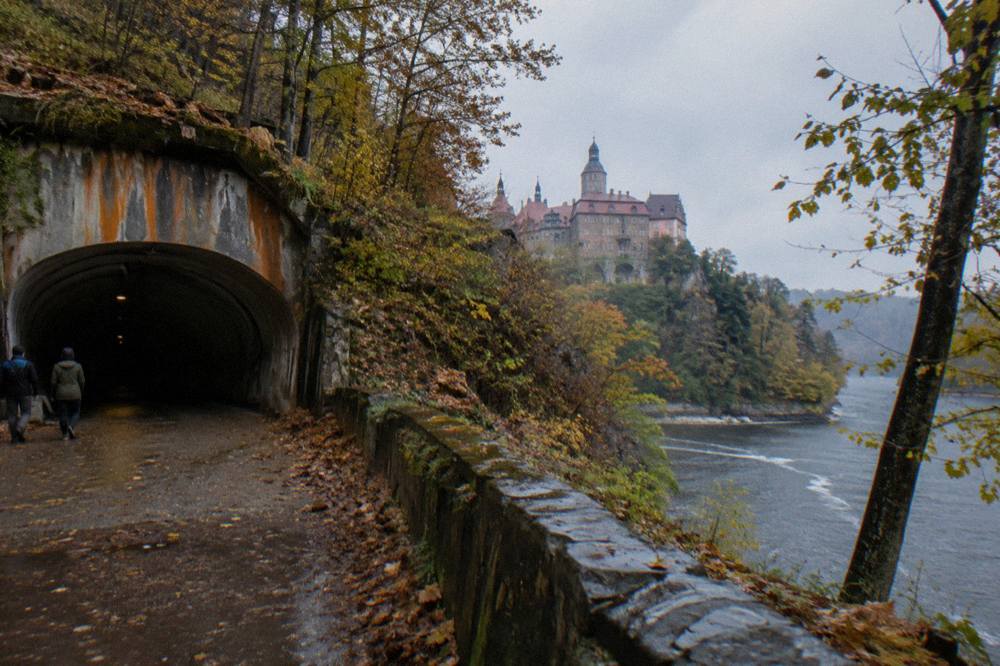
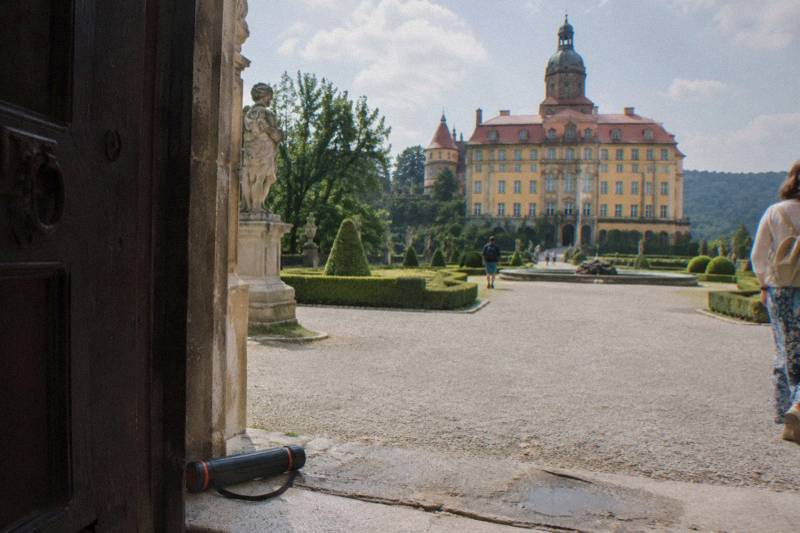
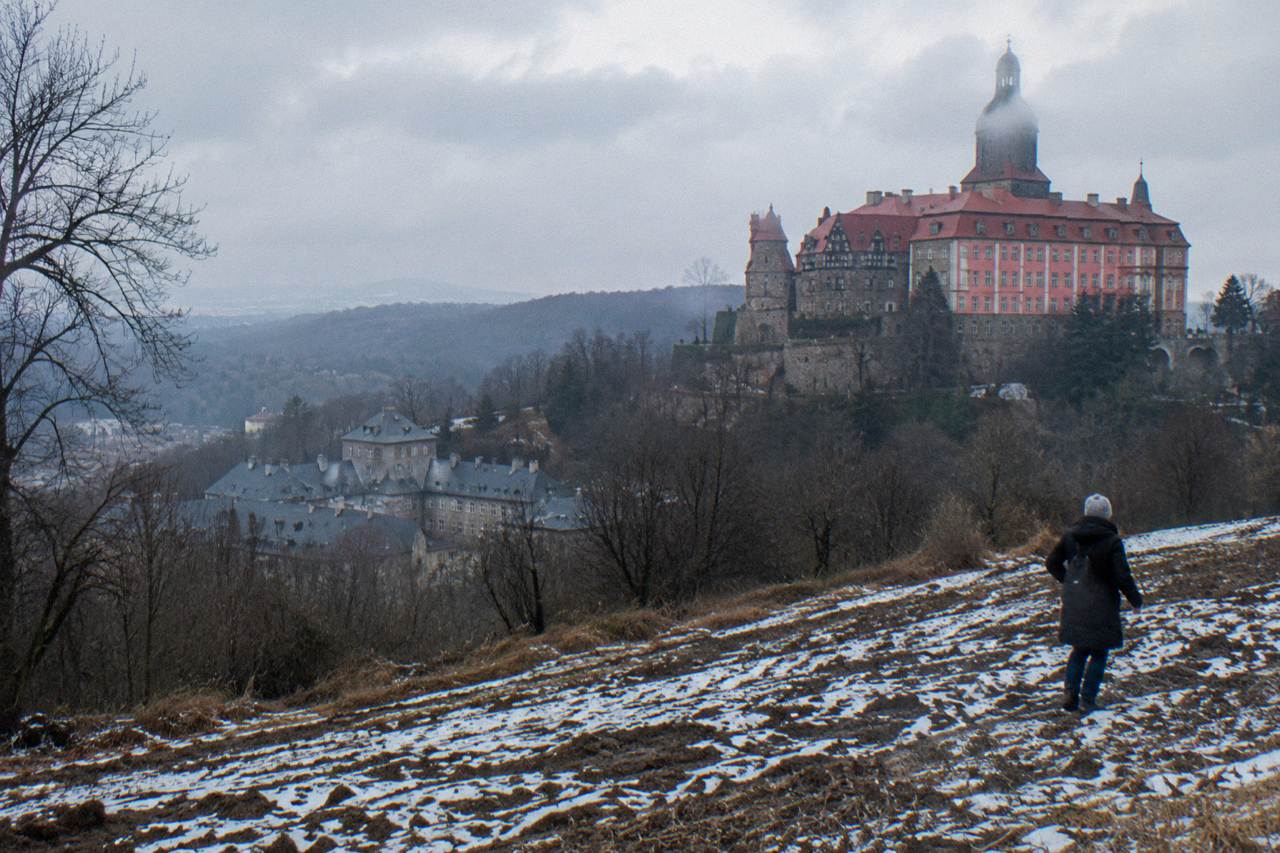
Książ Castle itself is the anchor of the story. Built between 1288 and 1292 by Bolko I the Strict and held by the Hochberg family from 1509, it stands on a rocky spur above the Pelcznica valley. In 1943 the Nazi authorities seized the castle and began driving tunnels beneath it, sinking a lift shaft intended to connect the planned underground levels with the Honour Courtyard above. The shaft was never completed. A collapse still visible on today's visitor route marks where it ends.
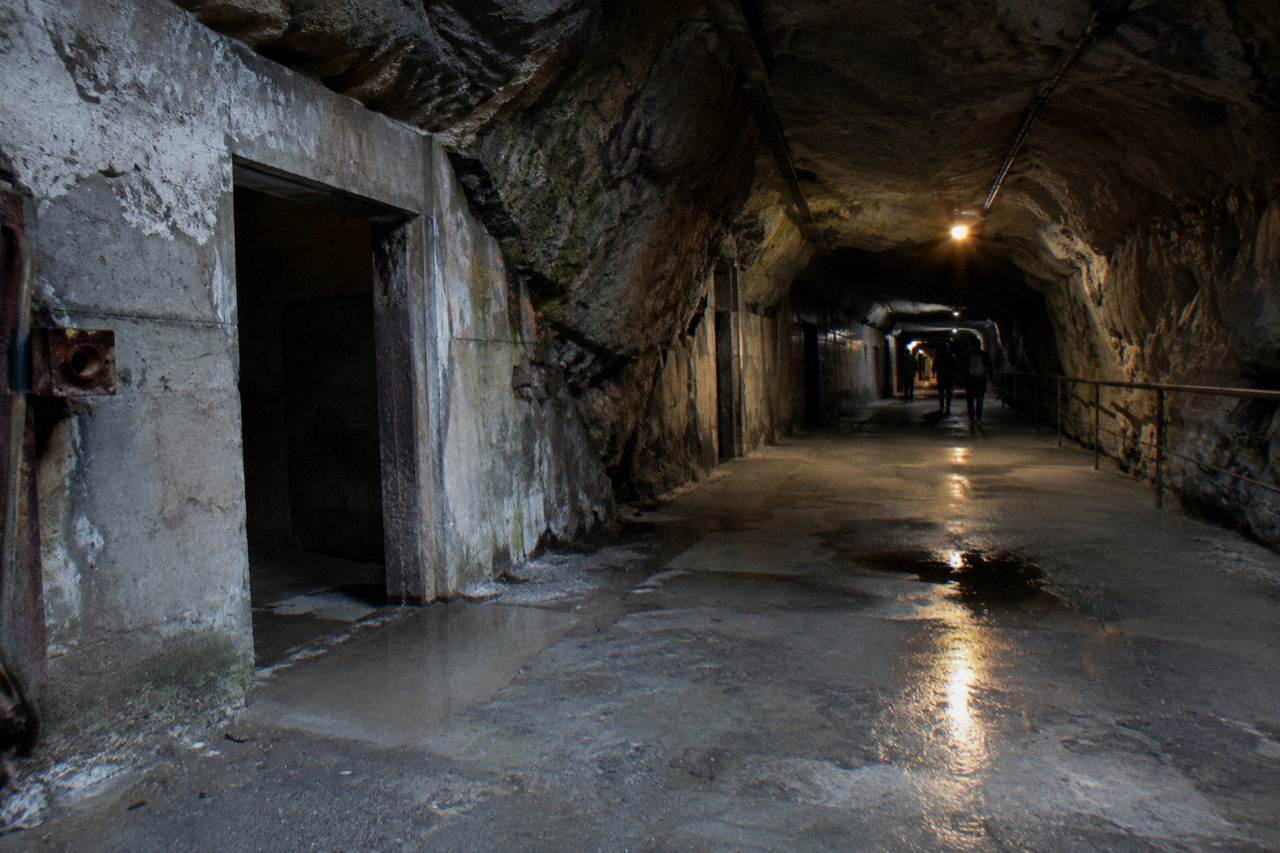
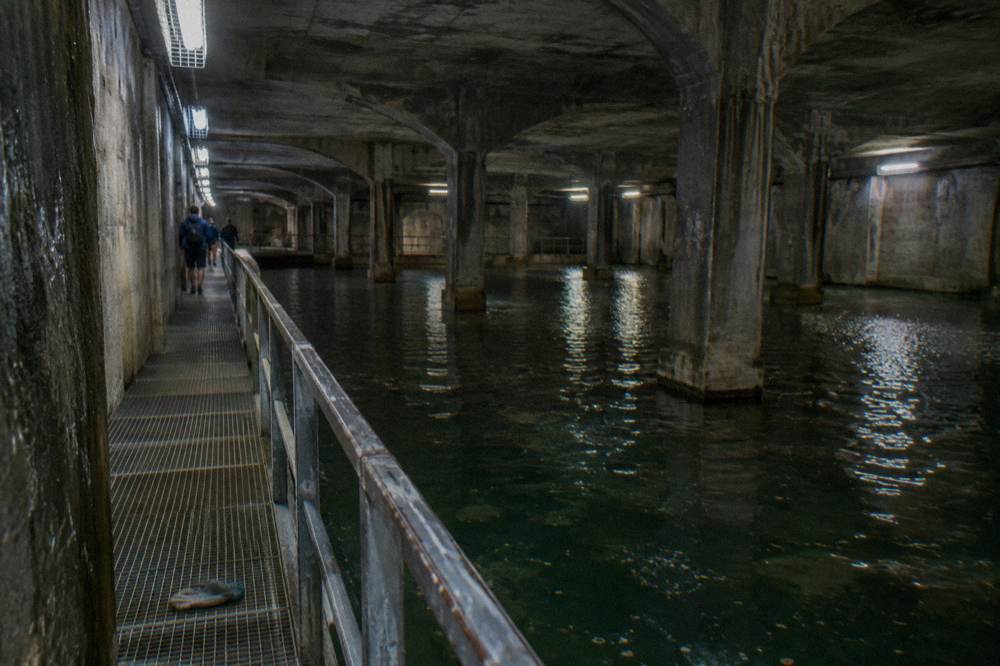
The scale of the works around the castle, and the question of what they were for, is covered in detail on the castle's own underground route page. The surviving visitor route runs about half a kilometre at roughly 50 metres depth, passing a large concrete-reinforced hall and raw rock-hewn corridors, and ending at the cave-in by the buried elevator shaft. Guides explain the documented history and the open questions side by side, including the fate of the prisoners who dug it.
The wider setting matters too. The castle and the tunnel complexes lie inside Książ Landscape Park, established in 1981, a protected band of forested hills covering about 31.55 square kilometres. Osówka, near Głuszyca, is about 20 minutes' drive from the castle, which is why the two pair so naturally on a single day trip. Wrocław, where every tour on this site departs, is about an hour's drive to the northeast.
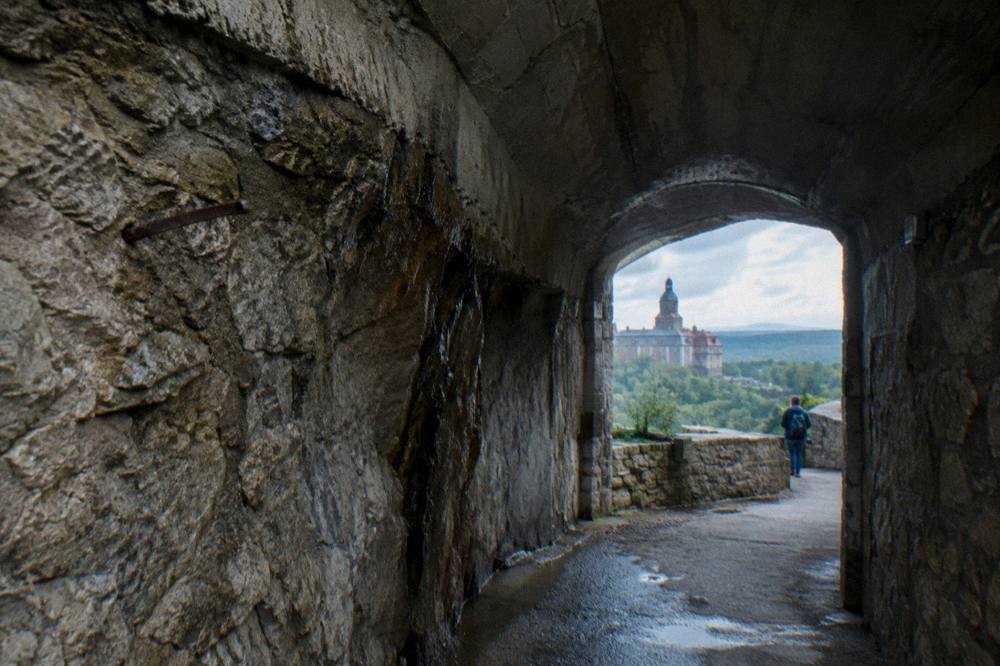
Planning a visit around the two headline sites is straightforward because both are open year round. The castle tunnels run on timed guided slots through the day, and Osówka runs several routes daily without booking for its main historical trail. A fuller rundown of the other Riese sites, including what is and is not verifiable about Włodarz, is in the site's guide to Project Riese at Osowka and Wlodarz, which goes deeper into each complex than this page needs to.
Wondering whether the tunnels and the castle fit into one booked day without hiring a car? They do.
Can you see both the tunnels and the castle in one day?
Yes, a single tour from Wrocław can cover Osówka, the Książ tunnels and the castle interiors in about 7 to 8 hours, with hotel pickup, transfers and entry tickets handled by the operator.
Who Built It, And At What Cost?
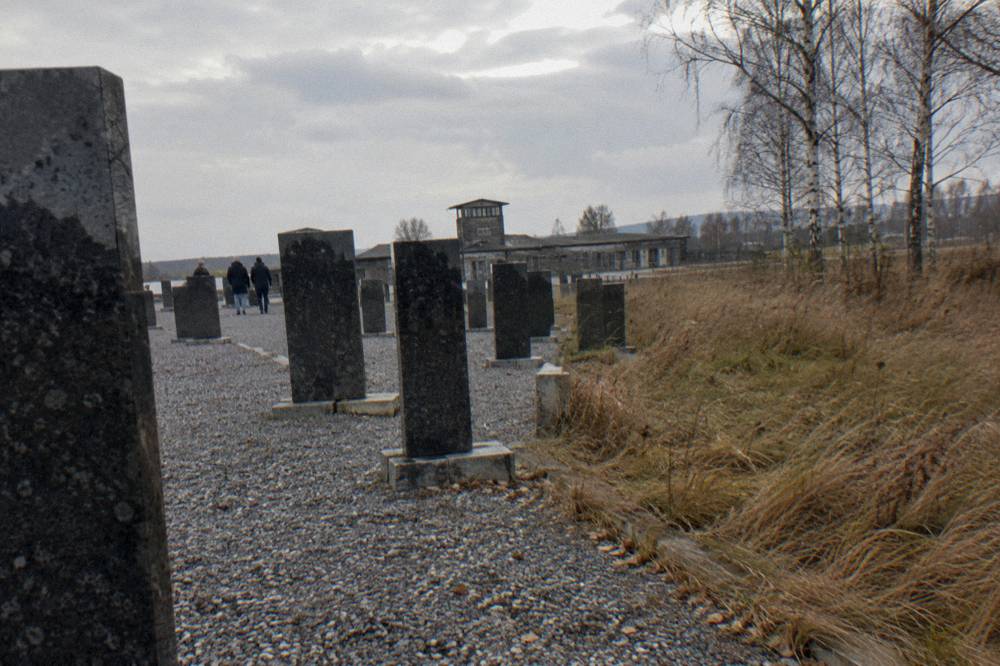
The tunnels were dug by forced labourers, concentration camp prisoners and prisoners of war, held in subcamps of Gross-Rosen and worked to exhaustion; thousands died, and the sites today double as memorials, with the former camp at Rogoźnica open to visitors free of charge.
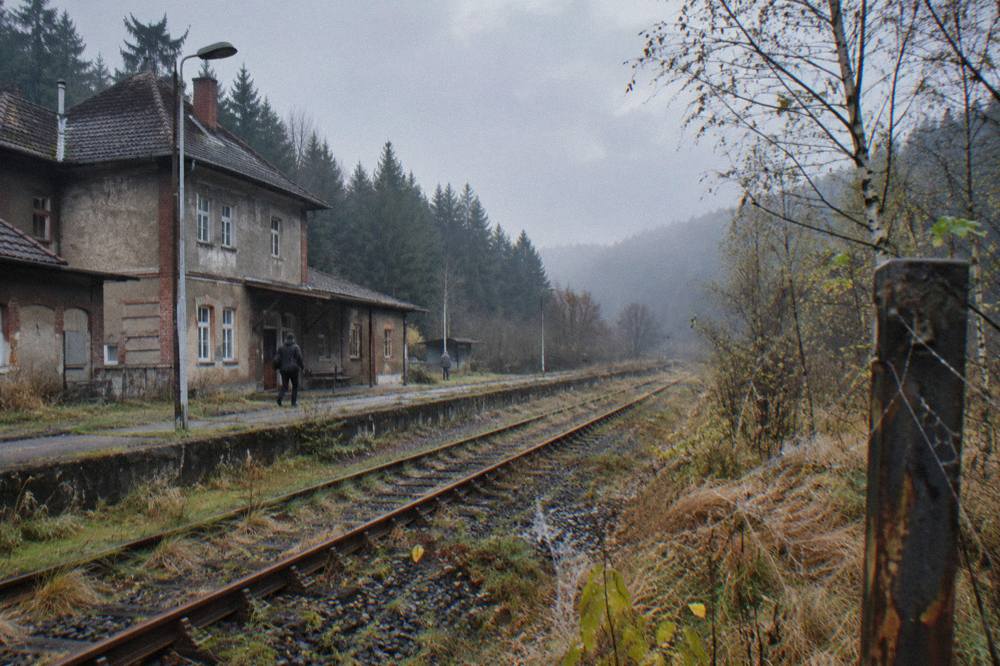
This part of the story deserves plain language. As the war turned against Germany, a network of labour camps was established across the Owl Mountains to supply workers for the Riese sites. Most were subcamps of Gross-Rosen, the concentration camp near Rogoźnica about 45 km northwest of the castle. Prisoners, among them Jews transported from across occupied Europe, Soviet and Italian prisoners of war, and other forced labourers, cut the tunnels by hand and with basic machinery, often working in dust, cold and darkness with inadequate food. Mortality was extreme. Exact death tolls vary by source and the memorials present ranges rather than a single figure.
“Awesome trip and an amazing driver. The communication leading up to the trip was also outstanding. I highly recommend this company and tour.”
The Gross-Rosen Museum's visitor information confirms the link plainly: prisoners from the camp were used for forced labour on Project Riese. The museum at the former camp site is open daily year round, 8:00 to 18:00 from May to September and 8:00 to 16:00 from October to April, closed on 1 January, 25 December and Easter Sunday. Entry for individual visitors is free; groups of ten or more must book a guide service. Allow at least two hours.
Visiting the camp memorial alongside the tunnels reframes the whole day. The tunnels become evidence rather than spectacle, and the museum's exhibition on the subcamp system explains exactly who was underground and why. That combination, Riese sites plus Gross-Rosen, is precisely what the Wroclaw: Day of WW2: Riese, Gross-Rosen, Ksiaz Castle tour delivers, a full 9 to 10 hour loop from Wrocław rated 4.8 across 19 reviews, from $253 per person, with hotel pickup and a group cap of 8.
What Can You Actually See At Osowka?
Osowka, near Gluszyca, preserves the most complete Riese complex, open year round with a historical route of about 60 minutes at 40 PLN normal or 33 PLN reduced, plus longer routes including an extreme route with flashlights for which booking is required.
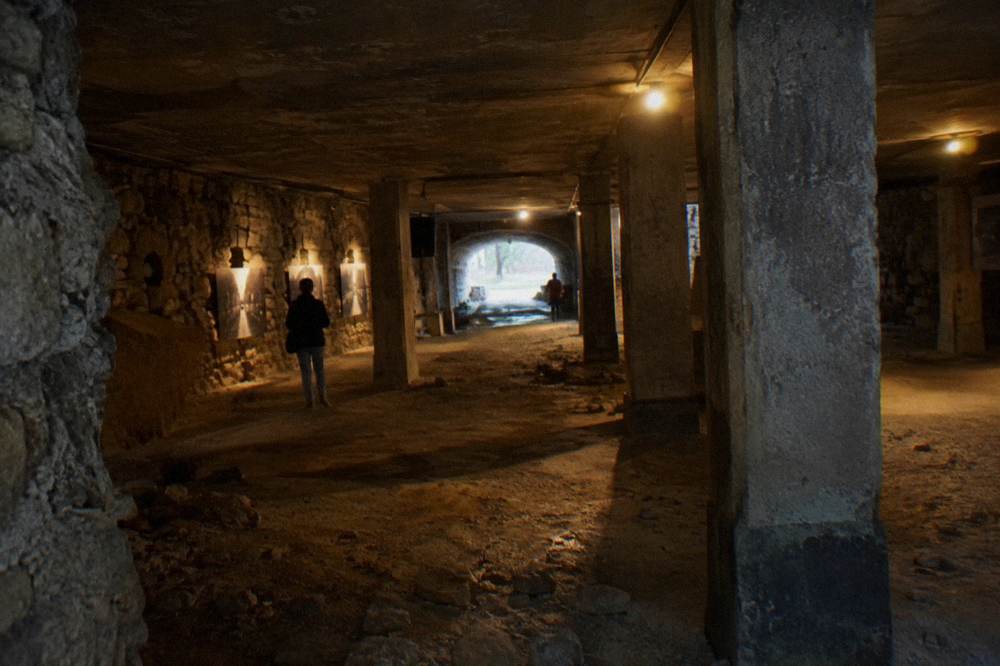
Osówka is the site that earned the "underground city" label honestly. Its historical route takes you through concrete-lined corridors and machine halls across multiple levels, parts of them never finished, with tool marks still visible in the rock. The complex was among the last abandoned in May 1945, and the unfinished state is part of the point: visitors see a construction site frozen mid-work rather than a polished attraction. The official Osowka site carries the current routes and prices.
The route options are worth comparing before you go:
| Osowka route | Duration | Price (normal / reduced) | Notes |
|---|---|---|---|
| Historical route, part 1 | about 60 min | 40 / 33 PLN | No booking needed, children 5+ |
| Extreme route, part 2 | about 70 min | 45 / 40 PLN | Booking required, daily 16:20, children 8+ |
| Retro route (Fridays 17:00) | about 60 min | 35 / 30 PLN | Limited edition route |
| Educational route | about 90 min | 40 PLN | Group-oriented |
Opening hours at Osówka run Monday, Tuesday and Sunday 10:00 to 17:00 and Wednesday to Saturday 10:00 to 16:00. The temperature underground is steady and cool, so bring a layer even in summer, and wear flat, closed shoes on every route. The extreme route hands visitors flashlights and takes in sections the historical route skips, and it is the closest experience on offer to walking an unfinished Nazi megaproject in its raw state. More of these guides are collected on Ksiaz Castle Tours.
For most visitors the historical route is enough. Guides, often local historians, cover the documented facts and are candid about the speculation. Questions about the gold train tend to get short, factual answers: nothing has ever been found, and the much-publicised search episodes of recent years produced soil studies and no treasure. The site's own framing, and this site's, treats the labourers' story as the real content.
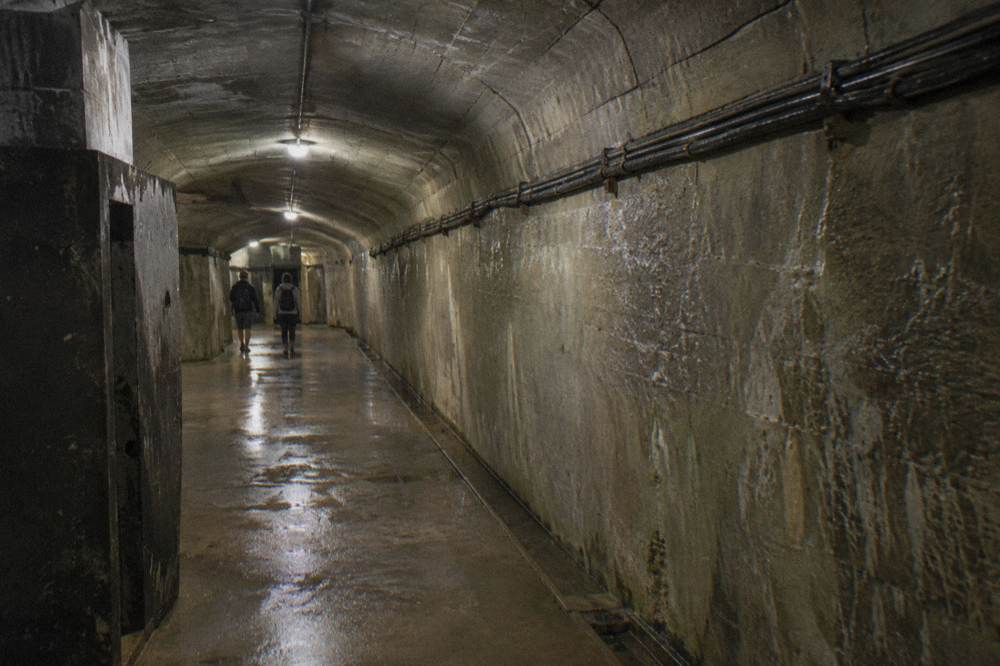
Osówka also appears on tours paired with the castle, most commonly the Wroclaw: Project Riese and Ksiaz Castle Private Tour, from $198, roughly 7 to 8 hours with hotel pickup in Wrocław and castle entry tickets included. Because that tour is private, the pacing at each site adapts to the group, which matters at Osówka if you want time in the surface exhibition area as well as the tunnels. Travellers comparing the wartime-history day trips side by side will find a fuller breakdown in the site's Ksiaz Castle and Project Riese tour guide.
“Only couple on the tour so became a private one. Punctual pick up, Jacob, our host, went above and beyond to help us have a memorable trip.”
Can You Visit The Tunnels Under Ksiaz Castle?
Yes, the Ksiaz underground route is open to visitors on timed guided tours lasting about 40 minutes, priced at 45 PLN normal or 39 PLN reduced for the tunnels alone, with combined castle tickets at 92 or 82 PLN, the tunnel air at about 6 C and children under 4 not admitted on the route.
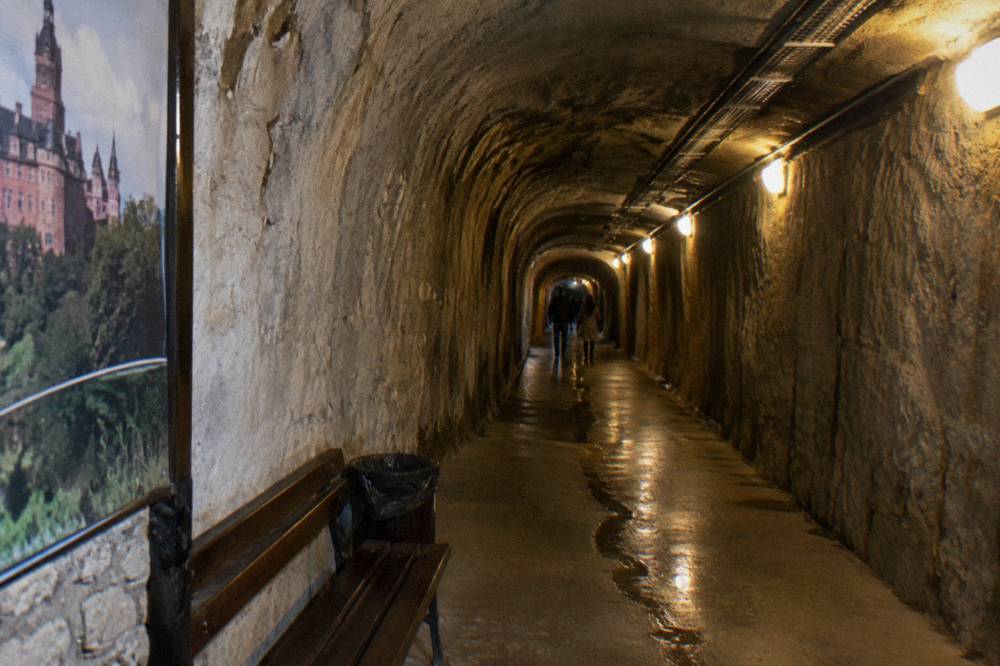
The castle's own tunnel route is shorter than Osówka's but arguably more atmospheric, because it runs directly beneath a functioning princely castle. Guides lead timed groups along about half a kilometre of corridor, through the reinforced concrete hall and out to the collapsed elevator shaft, narrating in Polish with an audio-guide supplement available in foreign languages. The temperature sits at roughly 6 C year round, so a warm layer is not optional, and sturdy flat shoes are advised. Visitors with claustrophobia, circulatory or respiratory conditions, or limited mobility are asked to reconsider, and the route is not wheelchair accessible.
Tickets work two ways. An underground-only ticket is 45 or 39 PLN, but most visitors buy a combined ticket, since the tunnels sit inside the castle complex: the castle with audio guide, underground route and Palm House together is 92 or 82 PLN, and the All Day Ticket covering castle, terraces, underground, Palm House, stud farm and mausoleum is 104 or 94 PLN. Prices are set by the castle, not by tour operators, and day tours from Wrocław generally bundle castle entry into the tour price, so check what your ticket includes before buying separately. The site's guide to the Ksiaz underground tunnels covers every ticket combination.
One timing note: the castle publishes opening hours month by month, and November 2026 runs 10:00 to 16:00 on weekdays and 10:00 to 17:00 on weekends, with the interiors closed entirely on 1 November. Timed underground slots fill first on weekends. Booking a tour that includes the tunnels removes the timing risk, which is one quiet argument for guided day trips over independent travel here.
Which Wroclaw Tours Cover Project Riese?
Three day tours from Wroclaw cover the Riese sites: a private Osowka and Ksiaz Castle tour from $198 rated 4.8 across 42 reviews, a 9 to 10 hour Riese, Gross-Rosen and Ksiaz tour from $253 per person, and a private Gross-Rosen and Ksiaz tour from $179.32, all with hotel pickup and free cancellation per their listings.
The choice between them comes down to how much wartime history you want in one day and whether the camp memorial is a priority. The comparisons below use each listing's own figures.
| Tour | Duration | Rating and reviews | Price | What it covers |
|---|---|---|---|---|
| Wroclaw: Project Riese and Ksiaz Castle Private Tour | ~7 to 8 hours | 4.8 from 42 reviews | from $198 | Osowka underground town, Ksiaz Castle, tickets included |
| Wroclaw: Day of WW2: Riese, Gross-Rosen, Ksiaz Castle | ~9 to 10 hours | 4.8 from 19 reviews | from $253 per person | Gross-Rosen Museum, Ksiaz Castle, Osowka, Krzyzowa |
| Wroclaw to Gross Rosen and Ksiaz Castle Private Tour | ~6 to 7 hours | 1 review, new listing | from $179.32 | Gross-Rosen Museum, Ksiaz Castle |
The private Osówka and castle tour suits travellers whose interest is the tunnels themselves. The full Second World War day adds the camp memorial and is the deepest historical itinerary on offer, though it is long, and the museum visit deserves unhurried time. The shorter Gross-Rosen and castle pairing works for visitors who want the camp story with less time in tunnels.
A note on what is and is not included. The Project Riese and Ksiaz private tour states that castle entry tickets are included, as does the Osówka pairing on the full wartime day. On the shorter Gross-Rosen and Ksiaz private tour, ticket inclusion is not stated on the booking page, so budget for entries separately and confirm before departure. All three list free cancellation, and all three start with hotel pickup in Wrocław rather than a fixed meeting point.
The Wroclaw to Gross Rosen and Ksiaz Castle Private Tour is the budget-conscious entry into the same country: from $179.32, private, roughly 6 to 7 hours. Being a new listing with a single review, there is no rating pool to speak of yet, which is worth knowing rather than a reason to skip it.
The full wartime day, by contrast, carries the strongest review signal among the Riese-focused trips, 4.8 from 19 reviews, and it is the only tour that puts the Gross-Rosen Museum, Osówka and the castle in a single itinerary.
For background reading before choosing, the question of whether the tunnels justify their ticket price on their own is taken up in the site's post on whether the Ksiaz tunnels are worth it, which weighs the 40 minute route against the combined ticket options.
Is Any Of The Legend True?
No. No verified treasure, train or secret archive has ever been found in the Riese tunnels. What does check out is the documented record: Organisation Todt ran the project, prisoners were used as forced labour, and the seven complexes were never finished, which is the account every serious memorial site presents today.
The legends multiply because the documentation is thin. The Nazis evacuated or destroyed records as the front approached, the sites fell inside postwar Poland with restricted access, and decades of amateur searching filled the vacuum. The famous gold train claim, which made global headlines and drew surveyors to a railway embankment near Wałbrzych, ended with no train found after extensive ground-penetrating radar work. No verified Nazi gold, Amber Room or secret weapons store has surfaced in the Owl Mountains.
What is verifiable is stranger than the myths in some ways. Organisation Todt, the same state construction machine behind the Atlantic Wall, poured resources into these hills in the final two years of the war, when Germany was losing on every front. Speer's own notes reference the cement quantities delivered to Książ. The scale of investment, in defeat, for an officially unacknowledged purpose, is the genuine historical puzzle, and it is one historians still argue about using the paper trail rather than metal detectors.
Treasure framing also does a quiet disservice to the sites. Osówka, the Książ tunnels and Gross-Rosen are memorials as much as attractions, and their exhibitions keep the labourers' story central. Visitors who arrive for the mystery tend to leave remembering the camps. That arc, curiosity into understanding, is exactly what a good guided day here delivers.
Practical planning follows from it. Book the tours or timed slots ahead for weekends, dress for 6 C underground, allow the better part of a day from Wrocław, and read something on the camp system before you stand in it. The documented history of Project Riese is short enough to read on the train out and long enough to change how the tunnels look when you are inside them. For the broader picture of what else the region offers alongside the wartime sites, the site's overview of day trips from Wroclaw places the Riese complexes in context with the castles, churches and mountains around them.
Common Questions About Hitler's Secret Underground City
What Was Hitler's Secret Underground City?
It was Project Riese, a Nazi programme that tunnelled seven underground complexes into the Owl Mountains and beneath Ksiaz Castle between 1943 and 1945, using forced labour from Gross-Rosen concentration camp subcamps. Nothing was finished and the purpose was never documented. The largest surviving site open to visitors is Osowka near Gluszyca.
Can You Visit The Project Riese Tunnels?
Yes. The Ksiaz Castle underground route runs timed guided tours of about 40 minutes at 45 or 39 PLN, and Osowka is open year round with a historical route of about 60 minutes at 40 or 33 PLN. Both also appear on day tours from Wroclaw.
Was The Nazi Gold Train Ever Found?
No. The much-publicised claim of an armoured train buried near Walbrzych prompted extensive surveys, and no train or treasure was ever recovered. No verified find has been made in the Riese tunnels.
How Cold Are The Tunnels?
The Ksiaz underground route sits at about 6 C year round, and the Osowka tunnels are similarly cool. Bring a warm layer and flat, closed shoes in every season.
Which Tour From Wroclaw Covers Project Riese?
The Wroclaw: Project Riese and Ksiaz Castle Private Tour, roughly 7 to 8 hours, from $198, rated 4.8 across 42 reviews, with hotel pickup and castle entry tickets included. A longer option adds the Gross-Rosen Museum memorial in a 9 to 10 hour day.