What Is The History Of Walbrzych?
The history of Walbrzych, from a Silesian settlement between Wroclaw and the Czech border to a coal and porcelain city beneath Ksiaz Castle, plus how to see it today.
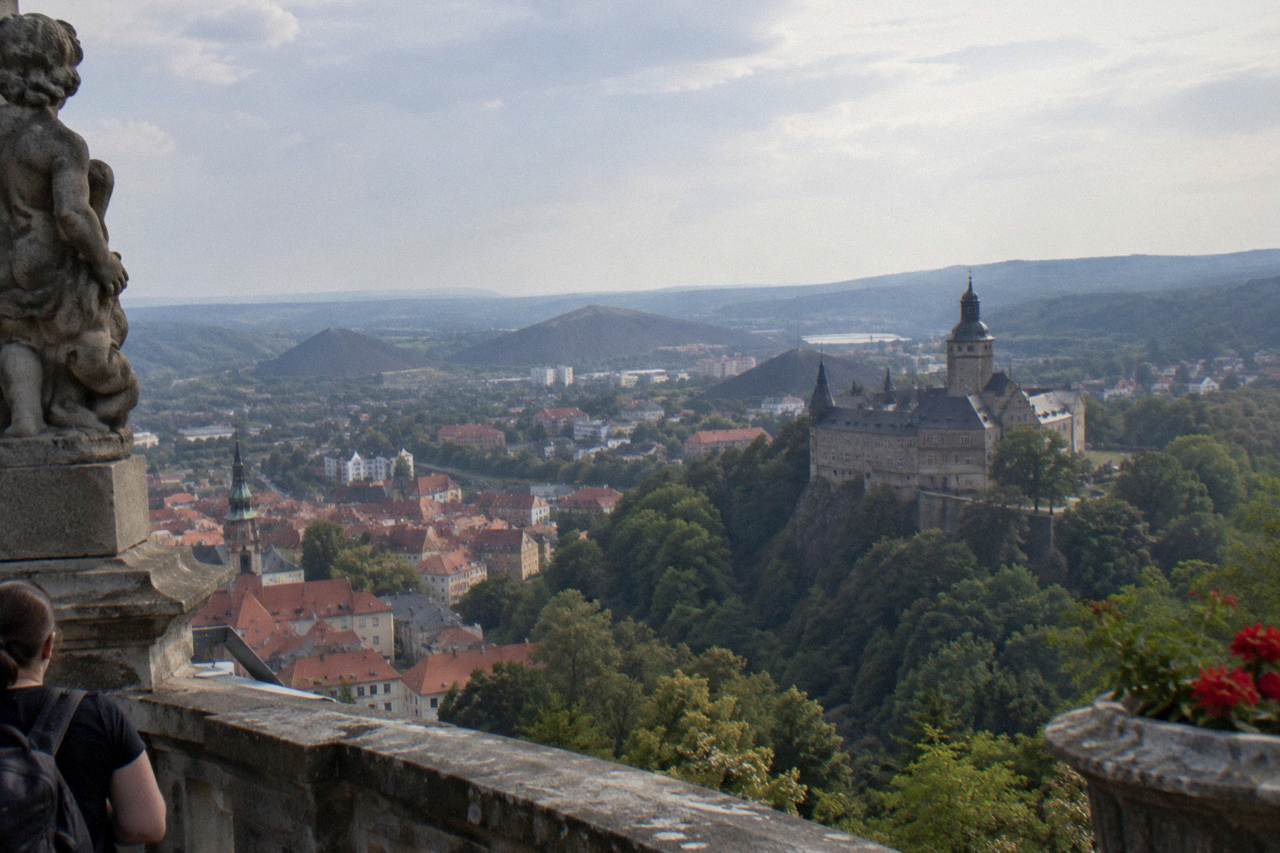
Wałbrzych is not a place most travellers plan around, yet it keeps turning up on itineraries for one overwhelming reason: Książ Castle stands on a wooded cliff above it. The city wraps around the base of that cliff in the Owl Mountains, about 70 km southwest of Wrocław and about 30 km from the Czech border, home to roughly 108,222 people. Its history explains why the largest castle in Silesia, an underground Nazi tunnel complex and a UNESCO-listed timber church all sit within a short drive of an ordinary Polish provincial town.
Wałbrzych is a Silesian city whose wealth came from what lay under and around it: coal, clay and timber, worked from medieval times into the modern era, with Książ Castle on the ridge above it from its construction between 1288 and 1292 onward. The town grew as a mining and craft settlement, industrialised early by Central European standards, and spent the decades after 1945 absorbing the same shocks as the rest of Silesia, changing states, war, and post-war restructuring. Today the city owns and runs the castle complex through a municipal company, and heritage tourism, from the castle tunnels to the former mine, has become part of local identity. The castle's own marketing leans into that industrial past, with one recent festival installation themed around a "City of Greenery, Porcelain and Coal" in honour of the city's 600th anniversary year. If you're curious how a city hall came to run one of Poland's grandest castles, our guide to who owns Książ Castle today explains the arrangement and what it means for your visit.
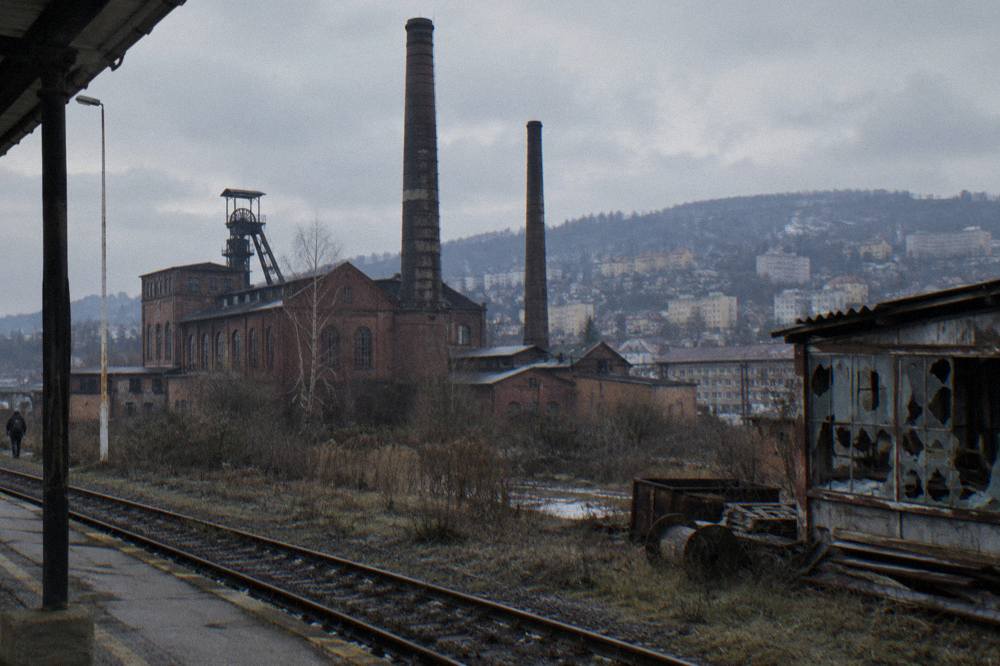
The name itself tells the first part of the story. Wałbrzych replaced the German name Waldenburg after 1945, and early descriptions of the settlement describe exactly that, a wooded valley settlement in a mountainous corner of Silesia where agriculture was hard and digging paid better. Coal was dug here for generations before the mines industrialised, and the town became one of Central Europe's significant coal centres, with the surrounding hills cut through with shafts, adits and rail lines. The Stara Kopalnia, the Old Mine heritage site in the city centre, preserves that era; the castle's own combined Explore Wałbrzych ticket lists it as a component, described in the official ticket footnote as a guided-only site about 10 km from the castle.
Porcelain belongs to the story just as much as coal. The city's factories produced tableware for well over a century, and the porcelain museum in Wałbrzych appears on the same official Explore Wałbrzych ticket, alongside the castle, the terraces, the Palm House and the Sobieski Park tower. That combination, a castle, a mine and a porcelain museum on one municipal ticket, is a fair one-line summary of what the city was built on: aristocratic land, black coal and white clay.
Modern times hit hard. Borders moved, the German-language Silesian town became a Polish city, the coal industry declined, and Wałbrzych gained a reputation in Poland as a struggling post-industrial town. That reputation is exactly why the castle's renaissance matters so much locally. The municipal company that runs it has built a year-round programme, from the TAURON Flower and Art Festival in spring to the Gardens of Light illuminations in winter, and visitors now arrive from Wrocław, Prague-direction travellers and day-trippers crossing the nearby Czech border in numbers the coal town never saw.
For most readers the practical question follows quickly: can this history be seen in a day? Yes, and mostly from Wrocław. The three most-reviewed formats from the Wrocław market cover the castle, its tunnels and the UNESCO Church of Peace in Świdnica to the southeast, and the trio below gives the useful spread of price, group size and pace.
Where Is Walbrzych And Why Did It Grow There?
Wałbrzych grew where the Owl Mountains channelled trade and mining between Silesia and Bohemia, about 70 km southwest of Wrocław and about 30 km from the Czech border, in a valley landscape where forests, coal seams and clay deposits sat close together. Geography did the founding work. The city's position on the road toward Bohemia made it a natural stopping point, while the surrounding hills supplied the raw materials that shaped its economy for centuries. Its population of 108,222 (as counted at the end of 2021) makes it one of the larger cities of Lower Silesia, and the wider region's other great sights, Książ Castle on one side and the Church of Peace in Świdnica on the other, frame it neatly for visitors.
The same geography explains the visitor routes today. Every tour option on this route departs from Wrocław, and the region is well served by Koleje Dolnośląskie regional trains, which list Wałbrzych Miasto and Wałbrzych Szczawienko among their station pairs with Wrocław Główny. Independent travellers can do the same run by car in well under two hours. For background on the city's location and population figures, the standard reference article on Wałbrzych collects the geography and census basics.
| Fact | Figure | Notes |
|---|---|---|
| Distance from Wrocław | about 70 km southwest | all regional day tours depart from Wrocław |
| Distance from Czech border | about 30 km | crossing used by Adršpach-bound itineraries |
| Population | 108,222 | counted 31 December 2021 |
| Setting | Owl Mountains, Książ Landscape Park | park established 1981, about 31.55 km2 |
| Signature site | Książ Castle | largest castle in Silesia, about 400 rooms |
Two neighbouring sites complete the historical picture. The Church of Peace in Świdnica, about half an hour's drive southeast, is one of the two Churches of Peace inscribed by UNESCO in 2001, a vast timber-framed Protestant church built under constraints that produced some of the most extraordinary wooden architecture in Europe; the essentials are covered in the Swidnica Church of Peace guide. And on the ridge above Wałbrzych stands the castle that increasingly defines the city for outsiders, which is where the deeper history begins.
How Does Ksiaz Castle Connect To Walbrzych's Story?
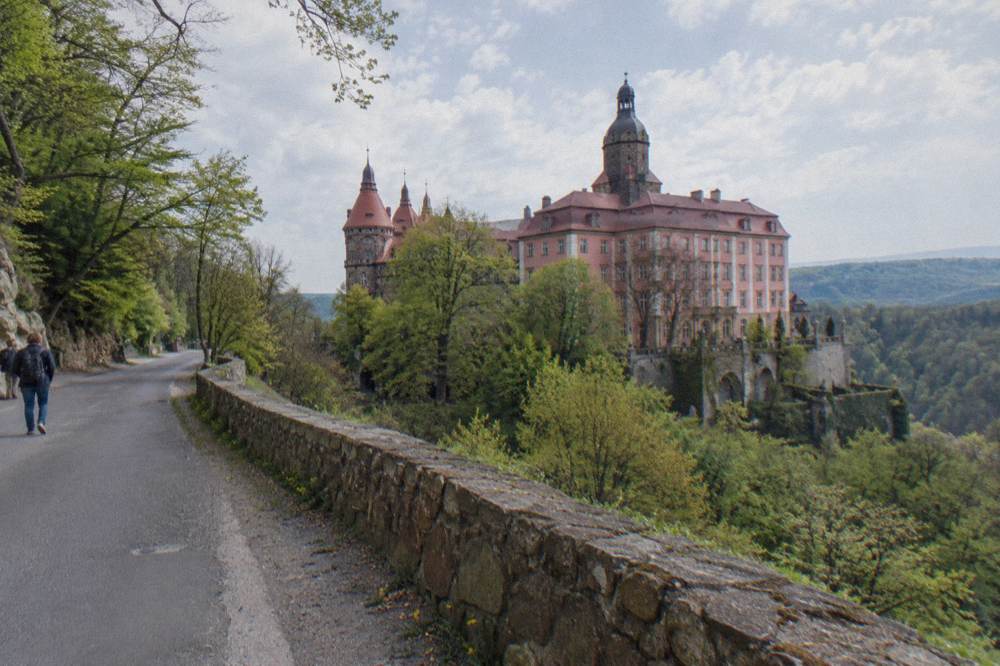
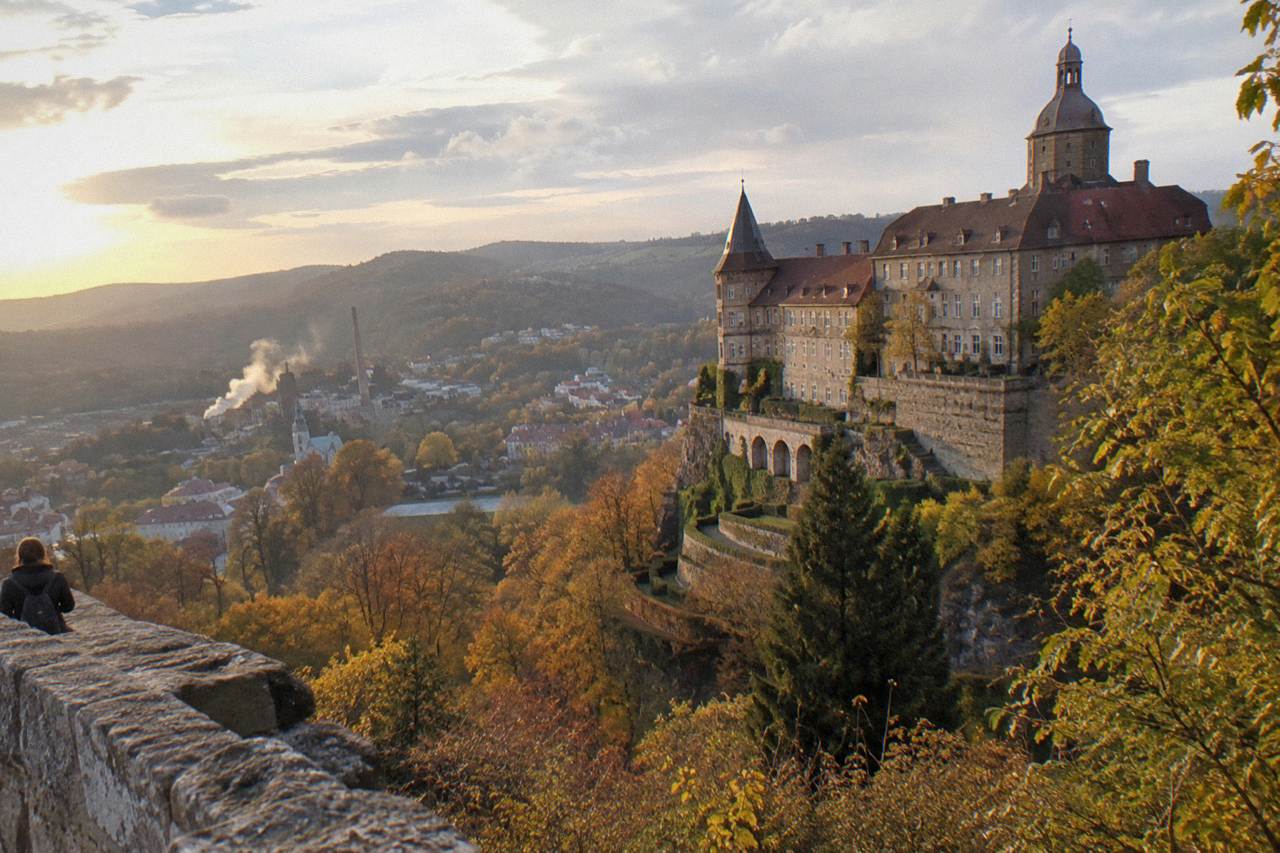
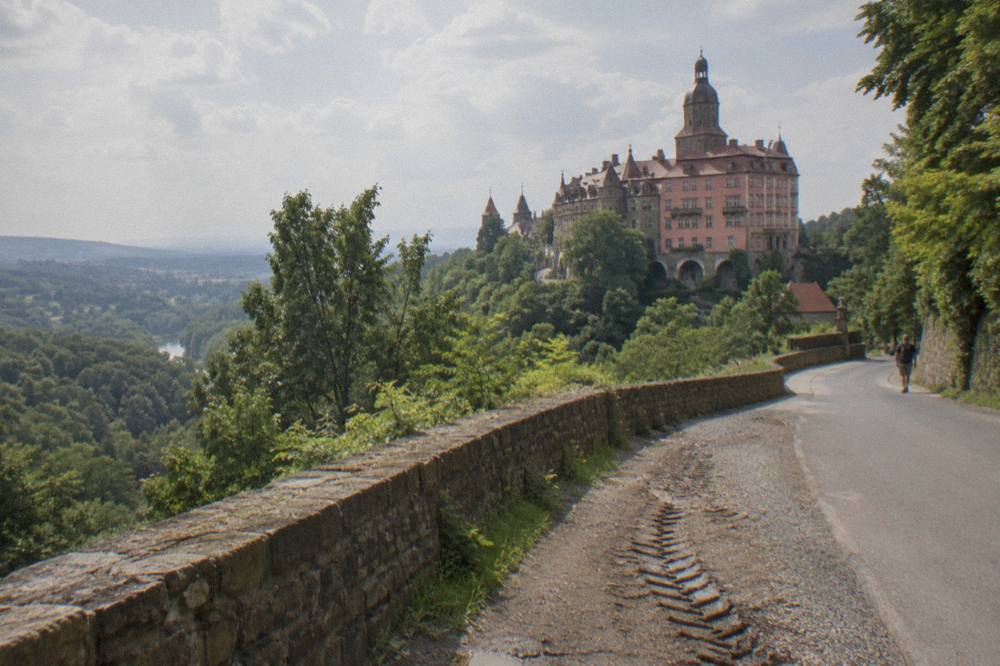
Książ Castle was built between 1288 and 1292 by Bolko I the Strict, first documented in 1293, and passed to the Hochberg family in 1509, who held it for over four centuries until the Second World War swept both family and region away. With about 400 rooms across roughly 11,000 square metres, it is the largest castle in Silesia and the third-largest in Poland after Malbork and Wawel. The castle and the city grew in parallel: the aristocrats on the hill owned the land the town worked, and the town's coal and industry paid for the expansions below. The Hochbergs, German princely names under the castle's German title Schloss Fürstenstein, gave the complex its baroque flourish and its terraced gardens. The castle's documented history traces this arc from Piast duke to princely family to municipal ownership.
The last famous resident ties the castle to a story readers often arrive already knowing. Daisy, Princess of Pless, the British-born wife of Hans Heinrich XV, was the castle's last great mistress, and the official castle account credits the British gardeners she hired with shaping the terraces visitors walk today. Her life, marriage and exile fill out the human side of the castle's final decades, and the Princess Daisy story is covered separately.
Ownership is the fact that most surprises people. The castle complex is owned by the City of Wałbrzych and run by a municipal company, which is why the castle's ticketing, events and opening-hour announcements are published on the city's official castle website, with hours and prices on the official sightseeing page. A city that once sent its coal down the valley now sends its name up the hill.
For visitors, the practical expression of that connection is the tour market. The most reviewed option connecting Wrocław, the castle and the region's UNESCO church is the From Wrocław: Książ Castle, Tunnels & Church of Peace Tour, about 8 hours, rated 4.8 across 117 reviews, from $145 per person, meeting at Cinema Nowe Horyzonty on Kazimierza Wielkiego in central Wrocław. It includes castle entry and runs in groups of up to 8. Everything else covered here is indexed on Ksiaz Castle Tours.
Is The Castle Best Seen With A Local Guide Or On Your Own?
The castle's daytime guided tours for individual visitors run in Polish only, at 11:00 and 14:00, so most international visitors use the audio guide, which is available in English and German and comes bundled with the standard castle ticket. Foreign-language guided tours require a group of 15 or more with prior notice. This is why so many international visitors book a packaged day trip from Wrocław instead: the operator handles transport and timing, and the castle portion follows the audio-guide format. The trade-offs between the two approaches are set out in the guided tour versus independent guide.
The wartime story continues underground. The underground route through the wartime Project Riese tunnels runs about 40 minutes at about 6 C, so dress warmly whatever the season, and note that children under 4 are not admitted. This is the same tunnel network that gives the Wrocław day trip above its name, and it is the part of the visit that connects most directly to the war years that ended the Hochberg era.
Independent visitors should budget with the official prices in mind: valid from 6 May 2026, the All Day Ticket costs 104 PLN, with a reduced rate of 94 PLN. For context on the castle's municipal partner down the hill, Wałbrzych counted 108,222 residents on 31 December 2021 and lies about 70 km southwest of Wrocław, a distance that makes the castle a practical add-on to a stay in the regional capital.
What Happened In Walbrzych During World War Two?
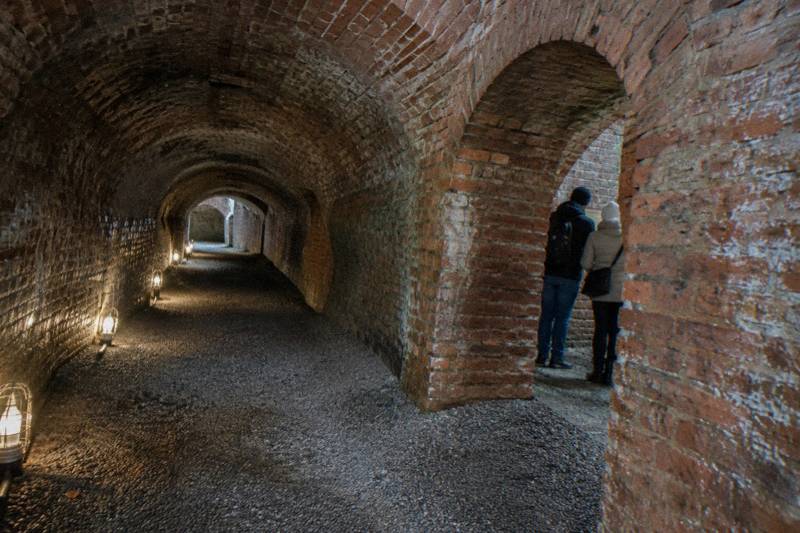
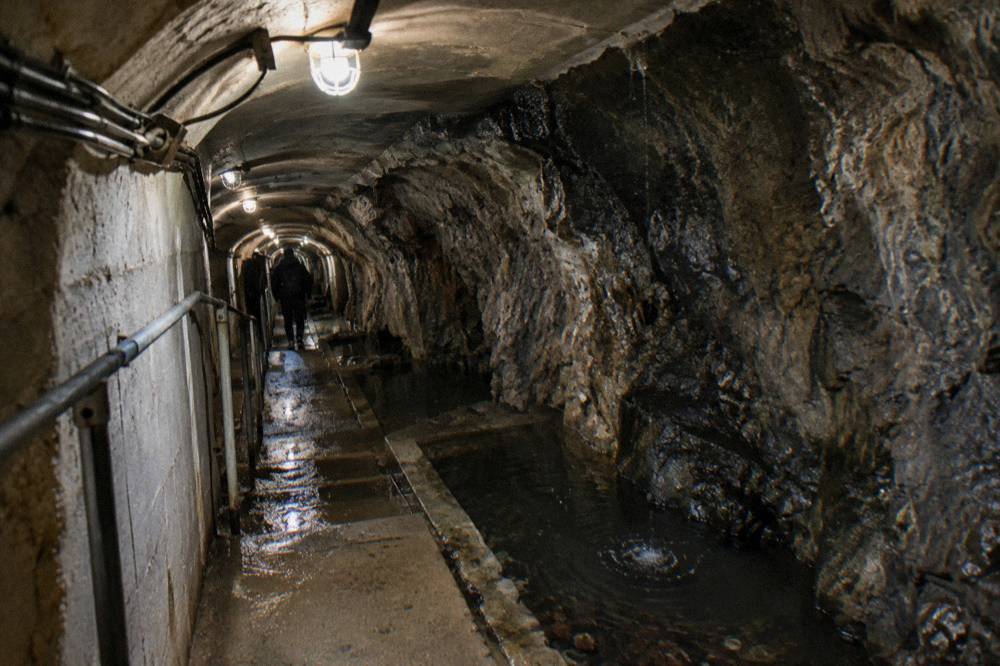
The Second World War brought Project Riese to the region, a Nazi construction programme from 1943 to 1945 that drove tunnels beneath Książ Castle and across seven sites in the Owl Mountains, using forced labourers and prisoners of war under brutal conditions that killed thousands. The programme's intended purpose was never confirmed; theories range from a military headquarters to armaments production. Under the castle itself, workers dug a reinforced underground network, complete with a shaft intended to rise to the Honour Courtyard, and the work stopped only with the war's end. Today about half a kilometre of that network is open as the castle's official underground tourist route.
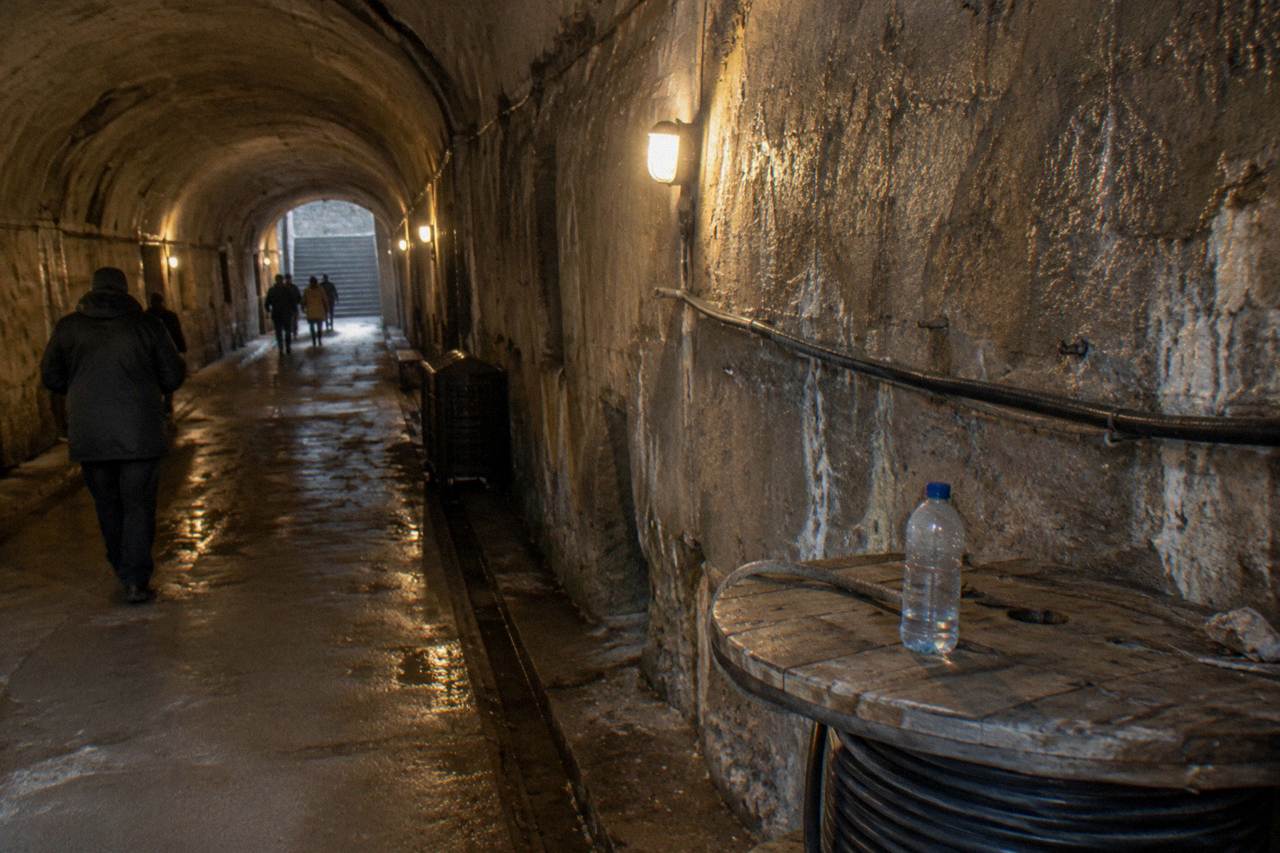
Visiting this history demands a factual and respectful tone, and the sites themselves set that register. The route beneath the castle is about 40 minutes, guided in Polish with an audio-guide supplement possible in foreign languages, at a constant temperature of about 6 C, and children under 4 are not admitted. The official underground route page describes the tunnels, the collapsed elevator shaft and the prisoners who excavated them. For the wider programme, the documented overview of Project Riese covers the seven complexes, the involvement of Organisation Todt and Albert Speer's ministry, and the forced-labour system behind it.
The connection to the concentration-camp system is explicit. Prisoners from Gross-Rosen and its subcamps were worked to death on these tunnels, and the Gross-Rosen Museum at Rogoźnica, which preserves the former camp site about an hour's drive away, confirms that its prisoners were used for Riese labour. Day tours that combine the castle, the Osówka underground complex and the museum exist for exactly this reason; the Gross-Rosen visit guide covers what to expect. It is heavy ground, and the operators who run these routes treat it accordingly.
What Is Walbrzych Like To Visit Today?
Today's Wałbrzych is a modest, green city of just over one hundred thousand people that lives increasingly from heritage tourism centred on the castle its municipal government owns, with a year-round event calendar that stretches from a spring flower festival to a winter light show running from 1 November 2026 to 28 February 2027. The city itself rewards a slow look: the Old Mine heritage site, the porcelain museum and the wooded Książ Landscape Park that surrounds the castle, established in 1981 across about 31.55 square kilometres. Most visitors, though, experience Wałbrzych as a corridor, arriving from Wrocław, climbing to the castle, and moving on.
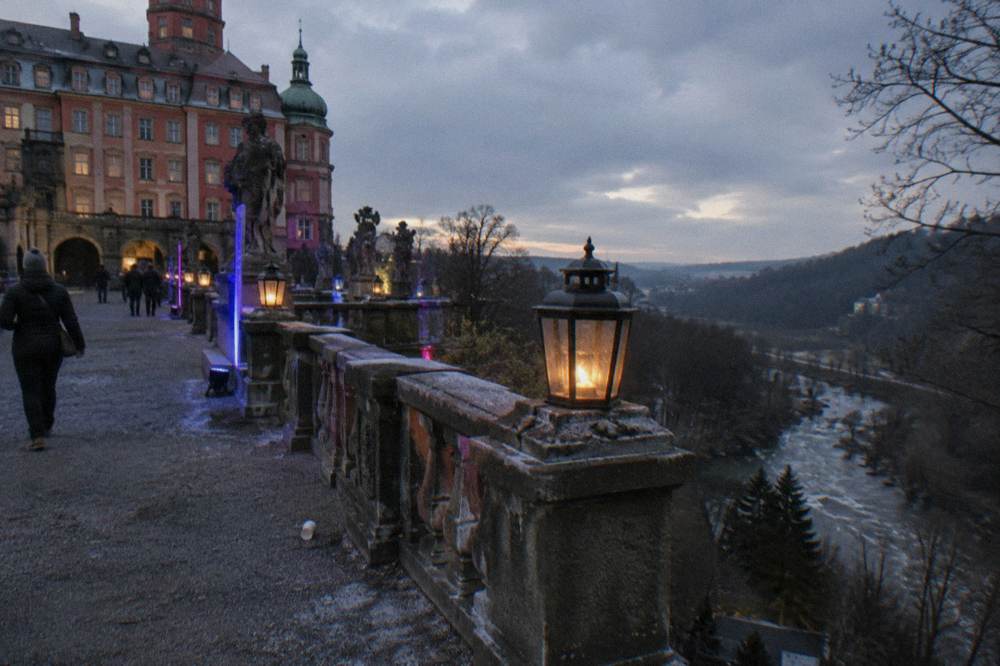
The winter light season is the strongest single draw outside the classic sightseeing circuit. The TAURON Gardens of Light runs from 1 November 2026 to 28 February 2027, illuminating the castle terraces and Palm House gardens in the evenings, Sunday to Thursday 17:00 to 20:00 and Friday to Saturday 17:00 to 21:00, with tickets at 45/39 PLN for the terraces, 35/30 PLN for the Palm House and 65/55 PLN combined. Note the November daytime pattern: castle interiors run 10:00 to 16:00 on weekdays and 10:00 to 17:00 on weekends, with 1 November interiors closed entirely. Hours are posted month by month, and the December to March block had not been published when this was written, so check the official site before a winter visit.
| Season at the castle | What runs | Verified detail |
|---|---|---|
| Spring | TAURON Flower and Art Festival | 2026 edition ran 30 April to 3 May, castle entry by festival ticket |
| Summer | Castle interiors, terraces, Palm House | terraces generally 1 April to 30 September, extension possible |
| Autumn | Interiors, underground route, night tours | night tour about 90 min, 74 PLN online, adults only |
| Winter | Gardens of Light | 1 Nov 2026 to 28 Feb 2027, evening hours above |
Ticket prices at the gate are set in PLN. The castle with audio guide plus Palm House costs 72/62 PLN, adding the guided underground route brings the combined ticket to 92/82 PLN, and the All Day Ticket covering castle, terraces, underground, Palm House, stud farm and mausoleum is 104/94 PLN, valid per the official price list in force since 6 May 2026. Photography for personal use is free inside the castle and Palm House. All of this is in the Ksiaz Castle tickets guide for those weighing a self-managed visit against a tour.
Which Day Trip From Wroclaw Covers Walbrzych's Highlights?
The classic Wrocław day trip covers Książ Castle with its tunnels, then the Church of Peace in Świdnica, in roughly 6 to 8 hours and from $145 to $218 per person depending on group size and inclusions, with every option departing from central Wrocław. The most reviewed option, the From Wrocław: Książ Castle, Tunnels & Church of Peace Tour, is about 8 hours, rated 4.8 across 117 reviews, from $145 per person, with castle entry included, English and Polish spoken, and a group capped at 8. The Wroclaw: Lower Silesia, Ksiaz Castle & Church of Peace Tour is about 6 hours, rated 4.4 across 46 reviews, from $218 per person, with hotel pickup in Wrocław and a group cap of 15.
The private alternative suits families and anyone who wants the day shaped around them. From Wroclaw: Ksiaz Castle & Swidnica Church of Peace Tour runs about 5 to 7 hours, rated 4.7 across 43 reviews, from $175, hotel pickup included, with castle entry tickets included and free cancellation per the listing. Its pricing basis is shown on the booking page rather than stated per person, so check the basis there before comparing it directly with the group options.
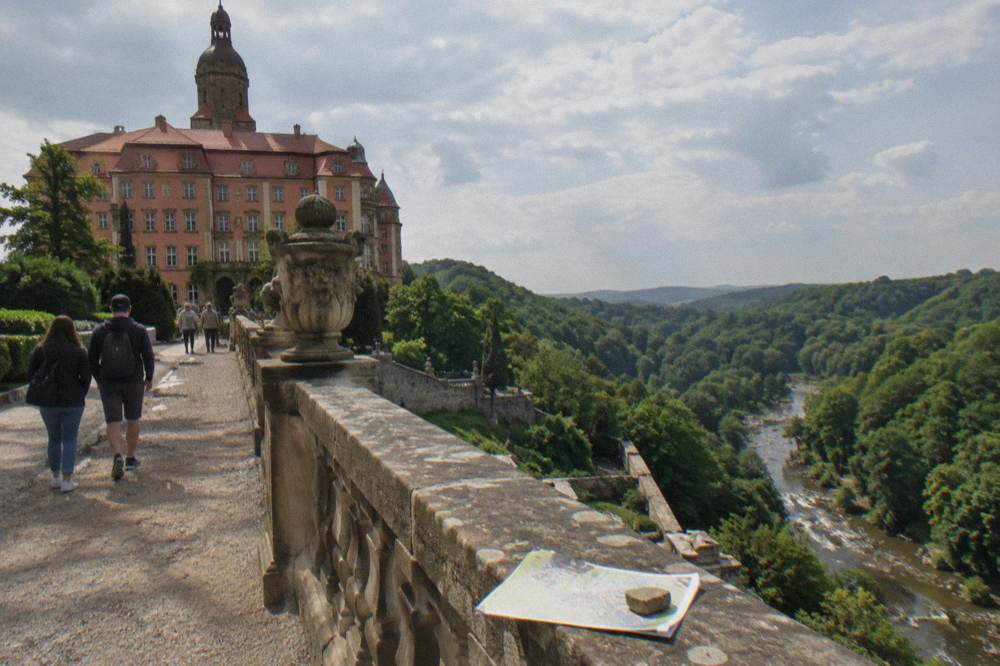
Choosing between them comes down to three questions. How much World War Two history do you want: the 8-hour small-group tour includes the tunnels, the private 5 to 7 hour option can be paced either way. Do you want pickup: the small-group tour uses a fixed meeting point in central Wrocław, the others offer hotel pickup. And how firm is the budget: from $145 per person for the small-group format against from $218 per person for the 6-hour pickup-included option. The half day versus full day comparison walks through the timing trade-offs in more detail, and the wider set of day trips from Wroclaw includes routes that add Project Riese sites or the Czech rock formations at Adršpach.
Whichever format wins, the historical through-line stays the same. A medieval castle built to guard a Silesian borderland, a town that grew rich on coal and clay, a war that drove tunnels beneath the hill, and a city that now sends its visitors home with all three stories in a single day. That is Wałbrzych's history, and it is unusually easy to walk through.
Common Questions About Walbrzych History
What Is The History Of Walbrzych?
Wałbrzych is a Silesian mining and porcelain city about 70 km southwest of Wrocław, with a documented history running through coal extraction, the Książ Castle complex above it, and the events of the Second World War. Today the city owns the castle and runs it as a municipal heritage attraction.
Who Owns Ksiaz Castle Now?
The castle complex is owned by the City of Wałbrzych and operated by a municipal company, which publishes its hours, prices and event calendar on the official castle website.
Was Walbrzych Part Of Germany?
Like all of Silesia, Wałbrzych changed states across the modern era as borders moved after the world wars. The castle carried the German name Schloss Fürstenstein under the Hochberg family, who held it from 1509.
What Was Built Under Ksiaz Castle During The War?
Project Riese, a Nazi programme from 1943 to 1945, drove reinforced tunnels beneath the castle using forced labourers and prisoners of war. About half a kilometre is now open as a guided tourist route of about 40 minutes.
How Far Is Walbrzych From Wroclaw?
About 70 km southwest of Wrocław and about 30 km from the Czech border. Every day-tour option departs from Wrocław, and regional trains also serve the route.
What Is Walbrzych Known For Today?
Książ Castle above all, the third-largest castle in Poland, plus its underground route, the winter Gardens of Light illuminations running to 28 February 2027, and an industrial heritage anchored by the Old Mine and the city's porcelain-making past.