What Happened To Princess Daisy Of Pless?
The story of Princess Daisy of Pless, the British-born last mistress of Ksiaz Castle, and how to see the rooms and terraces she left behind on a day tour from Wroclaw.
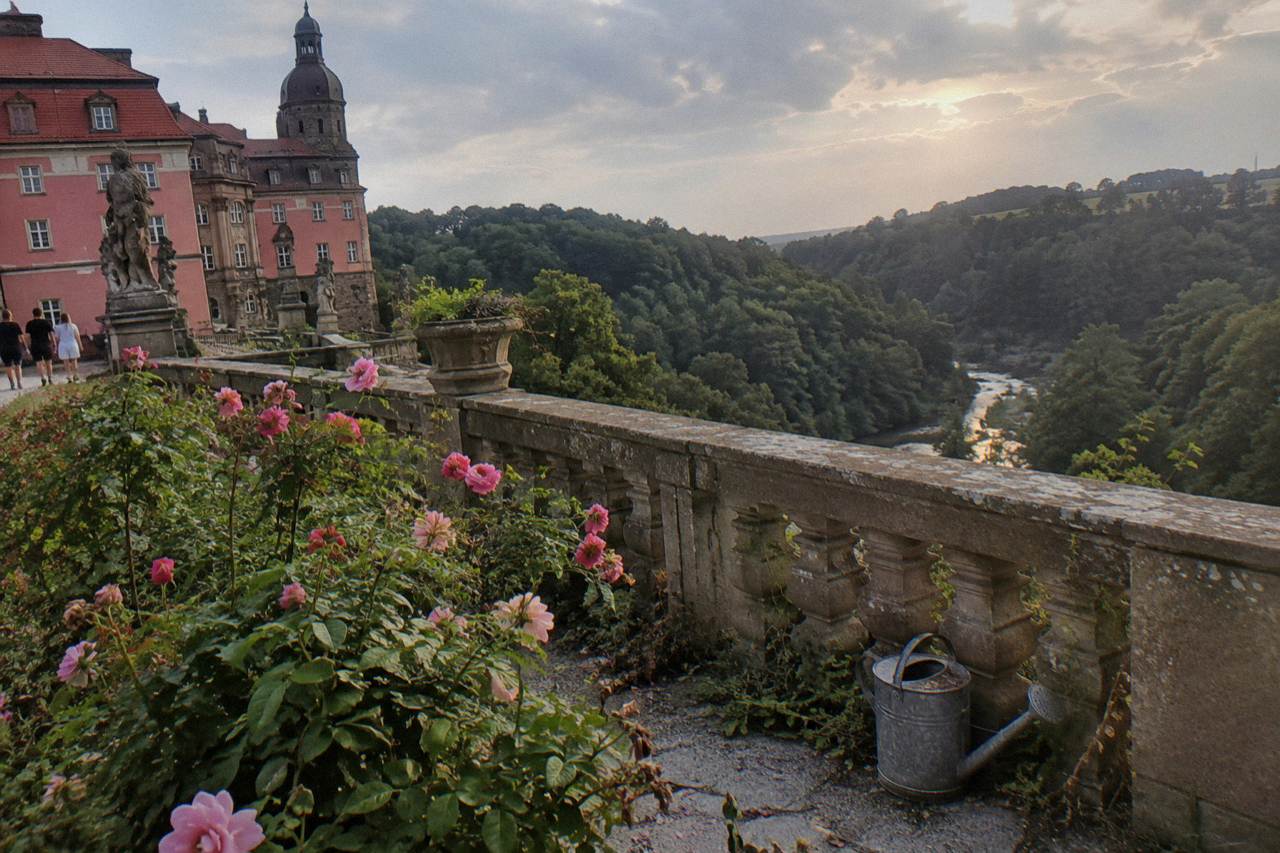
Princess Daisy of Pless was born in Britain, married Hans Heinrich XV, prince and heir of the Hochberg family, and became the last mistress of Ksiaz Castle before the Second World War swept the dynasty away. The Hochbergs had held the castle since 1509, and Daisy was the figure who defined its final glamorous decades, filling its rooms with guests and its terraces with gardens. When war came, the family lost the estate, the castle was seized for a secret construction programme, and Daisy never returned to the position she had held. Her presence is still the strongest personality in the building: the terraces she reshaped with British gardeners remain the castle's most photographed feature.
Daisy's story is the reason many visitors arrive at Książ in the first place. The castle is the largest in Silesia and the third largest in Poland after Malbork and Wawel, with about 400 rooms spread across roughly 11,000 square metres, but it is the human story of its last princess that gives the place its pull. Her name surfaces on the audio guide, in the garden design, in the flower festival themes and in the evening legends told on night walks through the corridors. Few European castles of this scale hinge so completely on one remembered woman.
For travellers planning around her story, three private options stand out from the field. The selection below covers the straightforward castle visit, a two-country castle-and-rock-formation combination, and a skip-the-line variant with a private car and the widest on-site ticket coverage. Each departs from Wroclaw with hotel pickup, and each gives you the castle interiors where Daisy's era is interpreted.
Who Was Princess Daisy Before Ksiaz?
Daisy was British by birth and married into the Hochberg dynasty, the family that had owned the Ksiaz estate since 1509, when she wed Hans Heinrich XV, taking the title Princess of Pless and the keys to the largest castle in Silesia. As his wife she became mistress of a residence of about 400 rooms, a position that made her one of the most conspicuous hostesses of her era in Central Europe. She was the last person to hold that role in any meaningful sense. Reference histories of the castle, including the standard English account of Ksiaz Castle, record her as the final mistress of the house before the war changed everything.
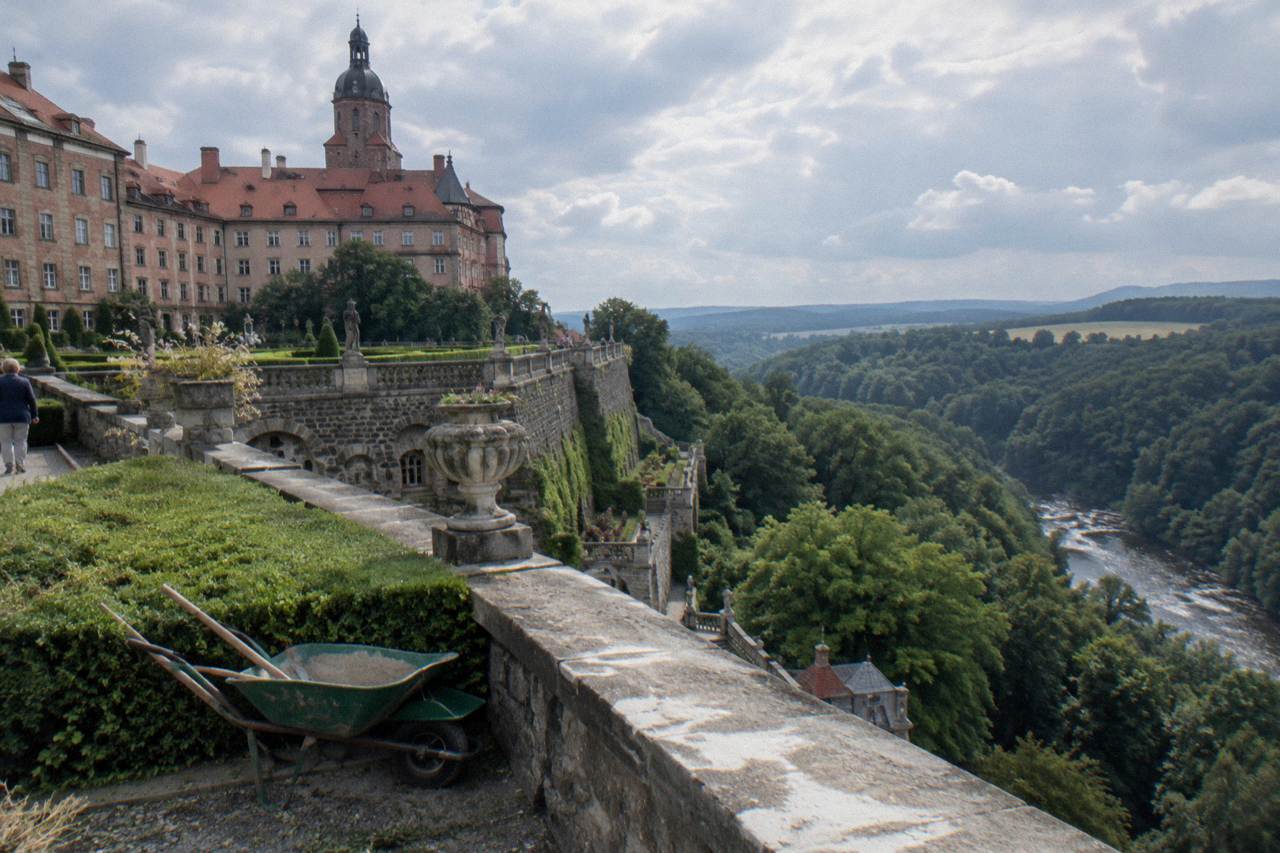
The castle she married into was already extraordinary. Bolko I the Strict built it between 1288 and 1292, and the first document mentioning it dates to 1293. Over the centuries it grew into a sprawling residence of about 400 rooms, known in German as Schloss Fürstenstein, set above a bend of the Pelcznica river valley inside what is now the Książ Landscape Park, a protected area established in 1981 covering 31.55 square kilometres. When Konrad I Hochberg acquired the estate in 1509, he began a family tenure that would last more than four centuries and end with Daisy's generation.
Daisy stood at the end of that long line, and that is precisely what makes her story compelling. She was an outsider, British-born, arriving into one of the oldest and richest aristocratic households of Silesia at the moment when that world was about to disappear. The castle she animated with parties, guests and gardeners would be transformed within years of her departure into something no aristocrat ever intended: a Nazi construction site, then a Soviet-era ruin, then a slowly restored municipal monument owned by a city she never governed.
“The driver/guide Mikael (sorry if I misspelled his name) was smart, very laid back and cool. He was good company and a nice person. Great driver, and where he takes you is fantastic.”
That arc, from ballroom to bunker to museum, is why her name carries so much weight in the castle's present-day marketing. Visitors do not come to admire a generic aristocratic pile. They come, in large part, to stand where she stood, and the castle's own interpretation leans into that. The terraces carry her gardening legacy, the audio guide carries her biography, and the seasonal events carry her legends, sometimes with a theatrical flourish that would probably have amused her.
What Happened To Princess Daisy Of Pless?
Daisy never saw the worst of it: her marriage to Hans Heinrich XV ended in divorce, and she died before the Nazi seizure of the castle and the Project Riese tunnels driven beneath it by forced labourers, and the family never regained the estate after 1945. She did not live to see the castle restored. The residence passed out of private hands entirely, and today the complex is owned by the City of Walbrzych and run by a municipal company, a transition covered in detail by the site's companion piece on who owns Ksiaz Castle now. The princess who once directed the household left only her imprint on the gardens and the rooms.
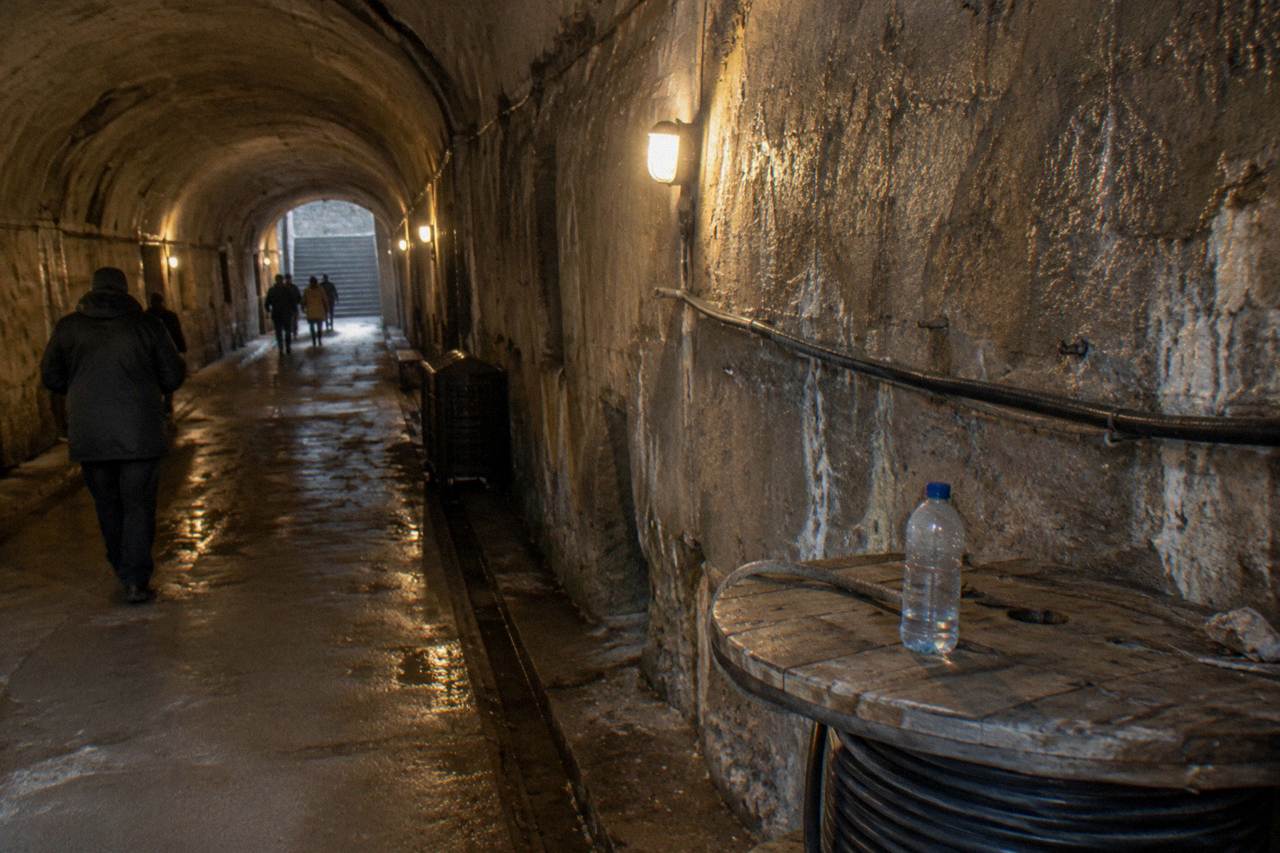
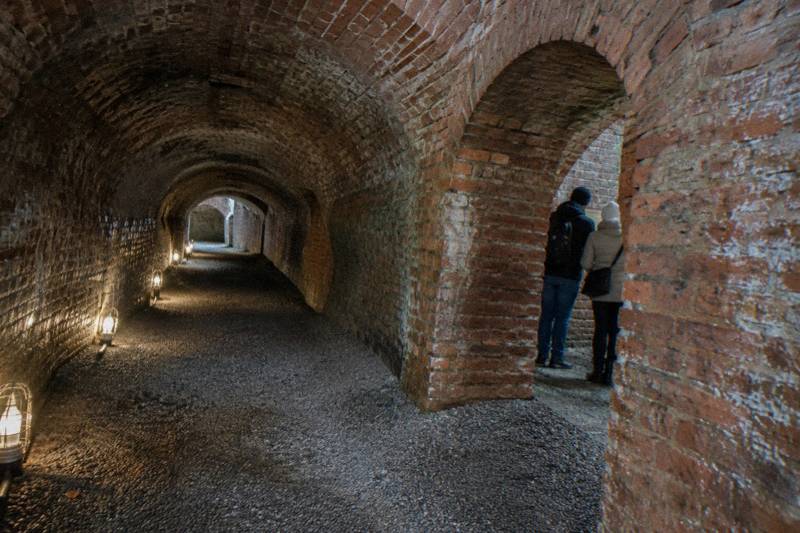
The war years were brutal for the building itself. Under the Nazi codename Project Riese, a programme of seven underground complexes in the Owl Mountains and at Książ running from 1943 to 1945, construction crews working with Organisation Todt carved a 1.5 kilometre underground route beneath the castle, reinforcing tunnels with concrete and beginning a lift shaft intended to reach the Honour Courtyard. The work was built on the forced labour of prisoners from Gross-Rosen concentration camp subcamps, thousands of whom died. The tunnels still exist and are open to visitors, a story explored in full in the guide to Ksiaz Castle underground tunnels. Daisy's elegant world above ground and the grim industrial complex below it are two halves of the same site's history, and the contrast is part of what makes a visit here feel heavier than a standard castle day.
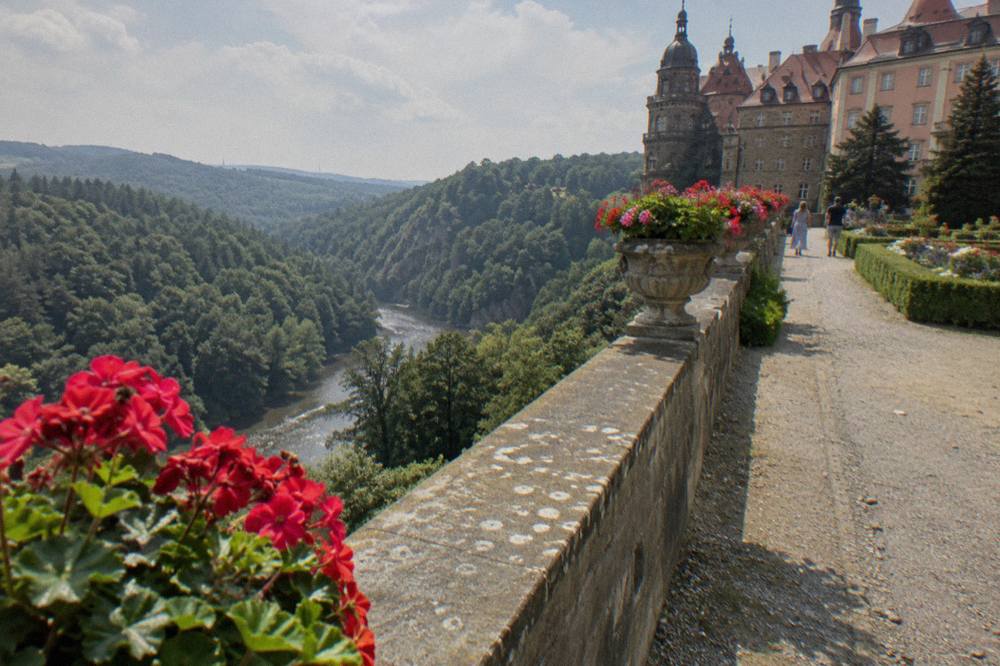
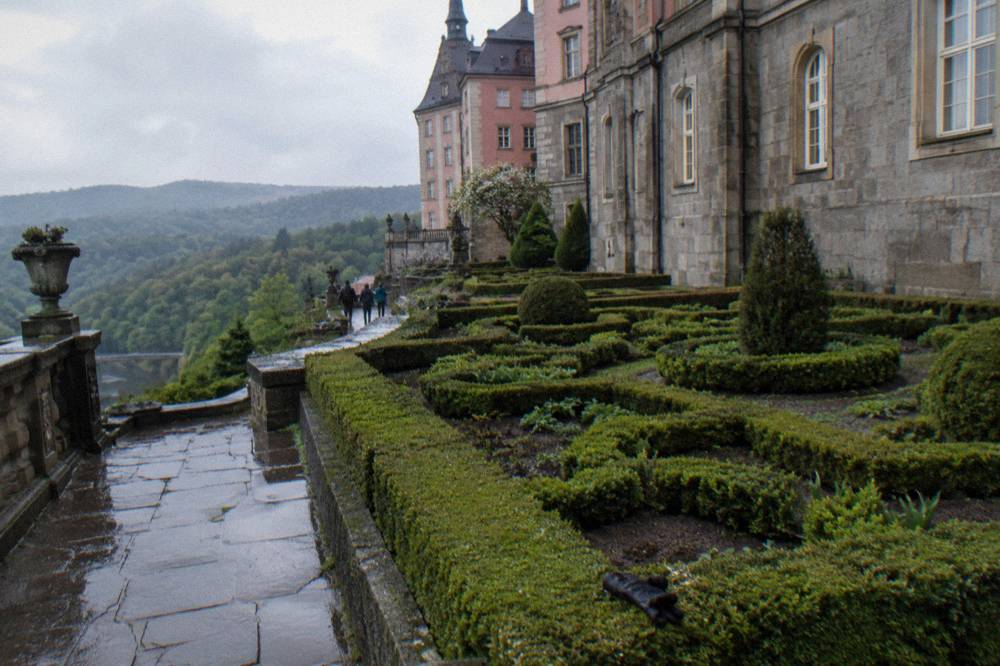
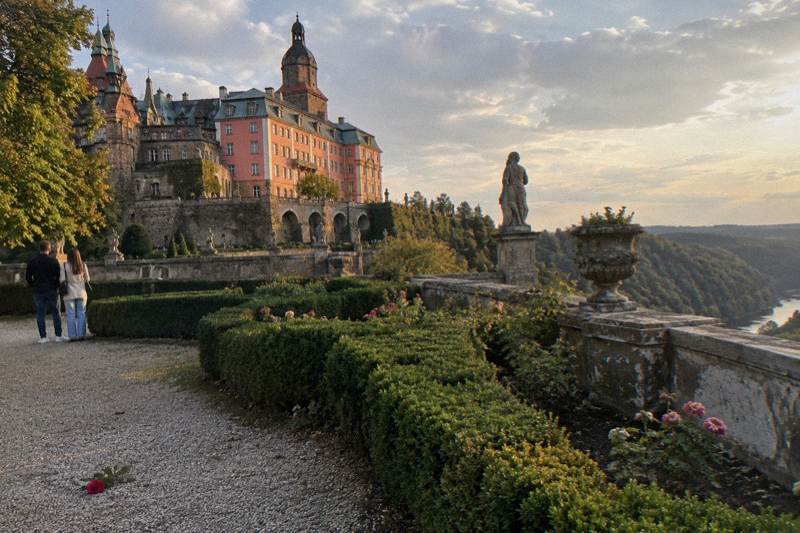
What survived of her era was largely the shell and the gardens. The terraces, laid out with the help of British gardeners Daisy herself hired, according to the castle's own official account, remain the defining exterior feature of the estate. They open generally from mid-April to the end of September, with possible extension into October at management's discretion, and in winter they give way to the TAURON Gardens of Light illuminations. Her story is the emotional hook the castle's interpretation leans on, from flower festival themes to the legends told on the evening night tours.
It is worth being honest about the limits of what a visit can recover. There is no single preserved "Daisy apartment" presented as a shrine, and much of the interior fabric was altered or stripped during and after the war. What the castle offers instead is atmosphere and architecture: the scale of the rooms she ran, the gardens she had laid out, and an audio guide narration that places her squarely at the centre of the final Hochberg decades. For most visitors that turns out to be enough, and for many it is the reason they booked the trip at all.
Can You Still See Daisy's Mark On The Castle Today?
Yes, and more of it than most visitors expect: the terraces she developed with British gardeners, the baroque garden parterre and the palace interiors she once ran are all part of the standard visitor route, and the English audio guide names her throughout the tour. The castle sightseeing offer described on the official castle sightseeing page sells a castle ticket with audio guide in English that includes the terraces when they are open, combined with the Palm House, for 72 PLN normal or 62 PLN reduced. An All Day Ticket at 104/94 PLN adds the underground route, the stud farm and the mausoleum.
The rooms themselves are the heart of it. Daytime guided tours for individuals run in Polish only at 11:00 and 14:00; everyone else tours with the audio guide, which is available in English and German. Groups of 15 or more can book a foreign-language guide with advance notice, in English, German, Russian or Italian. The practical split between these options, and how English speakers should plan around it, is set out in the guide to Ksiaz Castle in English. For a Daisy-focused visit, the audio guide does the storytelling work, so there is no need to pay extra for a private historian inside.
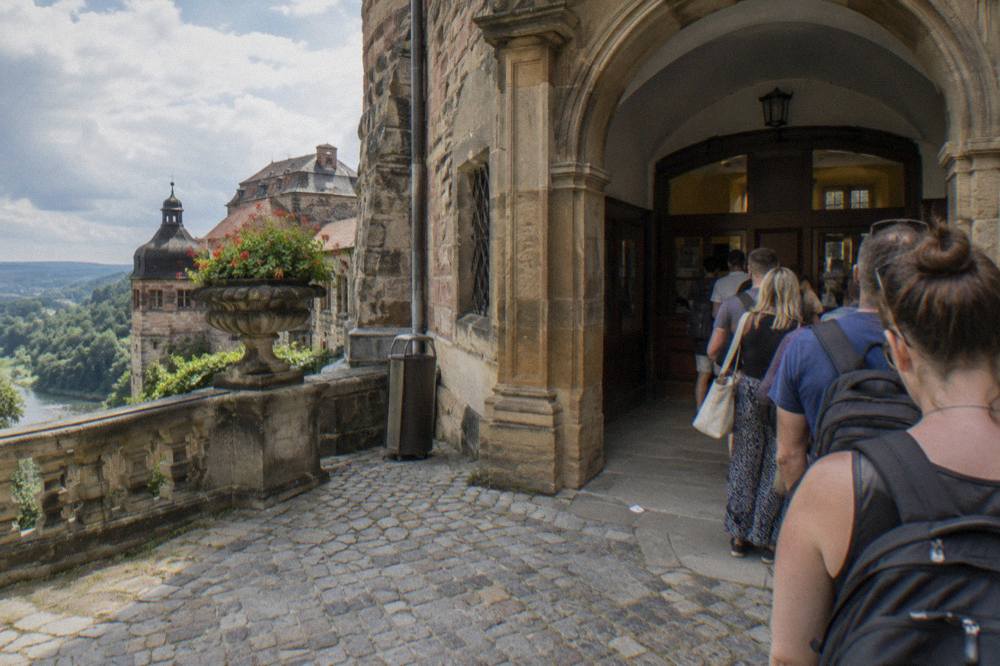
One detail worth knowing: tickets for the non-guided castle route are valid for 12 months from first use, though the castle entry itself is same-day only. The Palm House, which sits about 2 km away on ul. Wrocławska 158, is a single-entry component, so plan the walk or the short drive between the two sites before you begin. Photography for personal use is free throughout the castle and Palm House, with no flash or tripods inside the interiors, so the terraces can be photographed to your heart's content.
What Is The Best Tour For Following Daisy's Story?
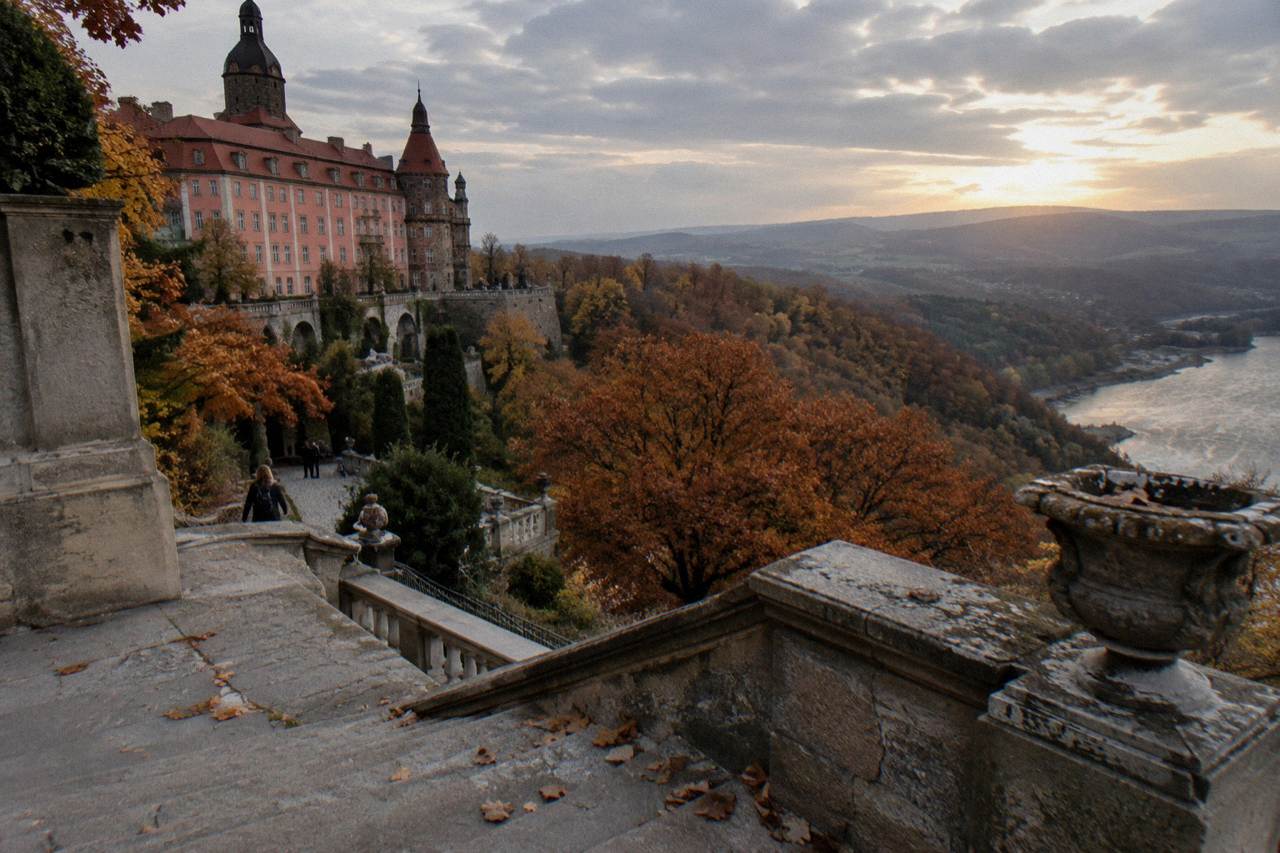
The From Wroclaw Ksiaz Castle Private Tour is the best pick for following Daisy's story: it runs about 5 to 6 hours, includes hotel pickup in Wroclaw, covers castle entry tickets for both the interiors and gardens, and starts from $165, with free cancellation per the listing. It carries 6 reviews, too few for a reliable star rating, so judge it on its shape rather than its score, and its shape fits the Daisy itinerary exactly, because it concentrates on the castle interiors and gardens rather than splitting the day across distant sites. The listing notes that a guided tour of the castle itself is not included, so the visit inside runs on the castle's own audio guide, which is where Daisy's story is told room by room.
A private format suits this particular mission. The castle's individual offer is self-guided with an audio guide anyway, so what a private tour adds is the friction-free frame: pickup at the hotel, the drive of roughly 70 km from Wroclaw to Walbrzych, tickets arranged, and the freedom to linger on the terraces where the Daisy story is most visible. Readers weighing private against shared formats will find the full trade-off in private or group Ksiaz Castle tours. In short: if the castle interiors and gardens are the whole point of your day, private transfers plus the castle's own audio guide is the most efficient package.
Want To Walk Daisy's Rooms Without The Planning?
The private tour can be booked the same week, and the listing offers free cancellation. Check availability and let the operator handle tickets and transfers.
Two other options deserve a mention for readers whose interest in Daisy extends into a fuller Lower Silesia day. The Skip-the-line Ksiaz Castle from Wroclaw by Private Car, from $231, runs about 5 to 6 hours with hotel pickup and includes castle entry tickets covering the interiors, the underground and the Baroque garden, plus the Palm House, with 4 reviews so far. Its guide languages include English, German and Polish. For a bigger swing, the Wroclaw to Rock City in Adrspach and Ksiaz Castle day trip, from $200, rated 5.0 across 26 reviews, pairs the castle with the sandstone rock labyrinths across the border in Czechia over about 9 hours, hotel pickup and castle entry included. It is the strongest reviewed option on the site, though the castle share of the day is proportionally smaller.
When Is The Best Time To Visit For The Daisy Story?
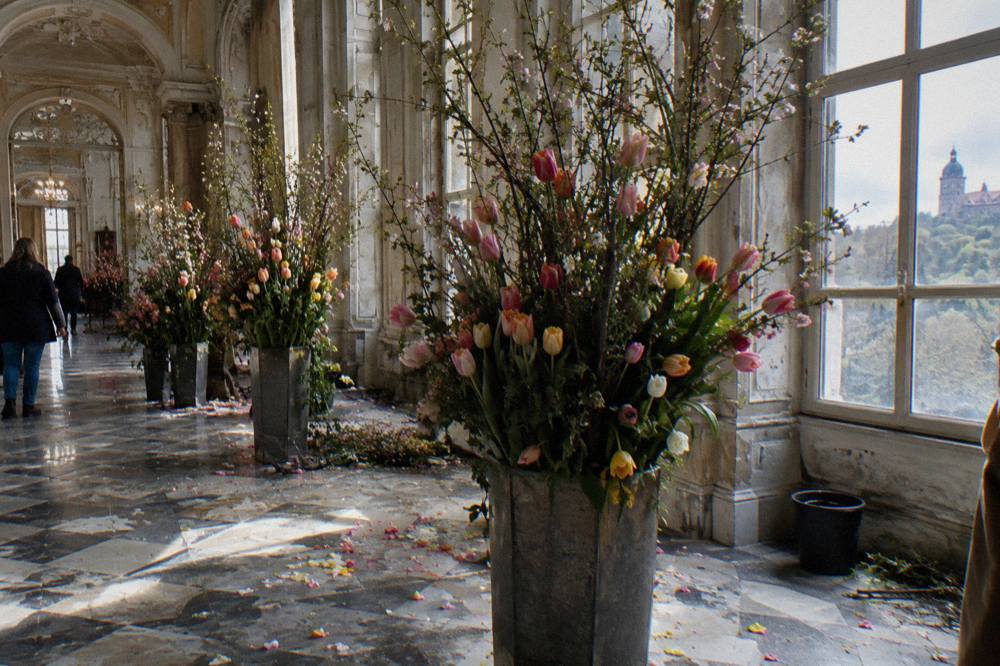
The terraces, Daisy's signature contribution, are open roughly from mid-April to the end of September, so late spring through early autumn shows her legacy at its fullest; the flower festival in early May is the seasonal peak, though it replaces the normal guided narration. The TAURON Flower and Art Festival, held 30 April to 3 May in 2026 for its 36th edition, fills more than 40 spaces of the castle with installations by over 100 florists, and festival tickets replace normal castle access on those days. During the festival the visit is self-guided with no audio guide, so readers chasing the historical Daisy narrative get more from an ordinary day than a festival day.
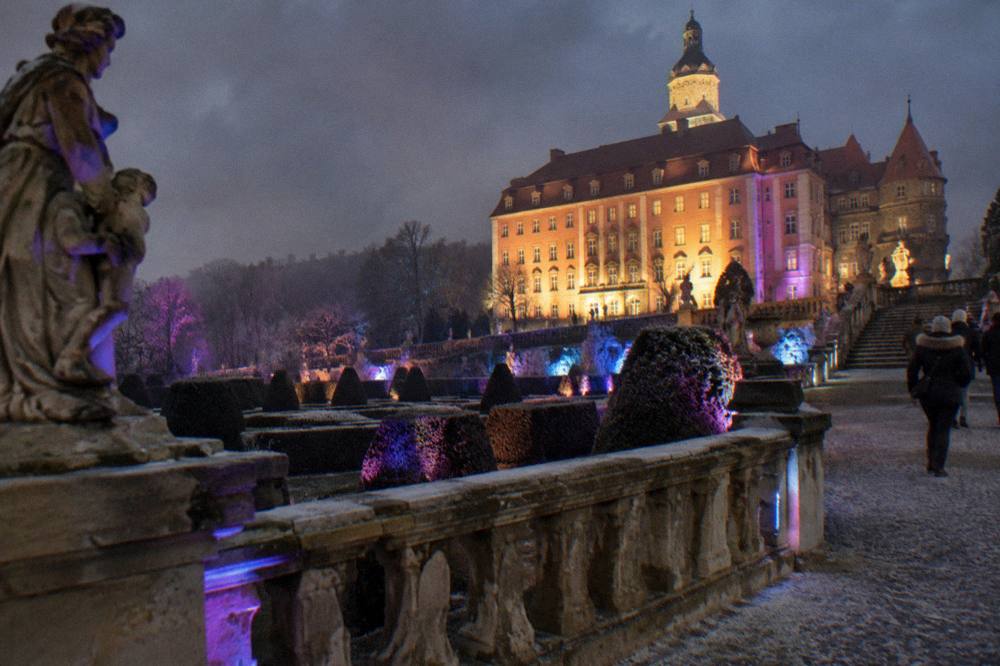
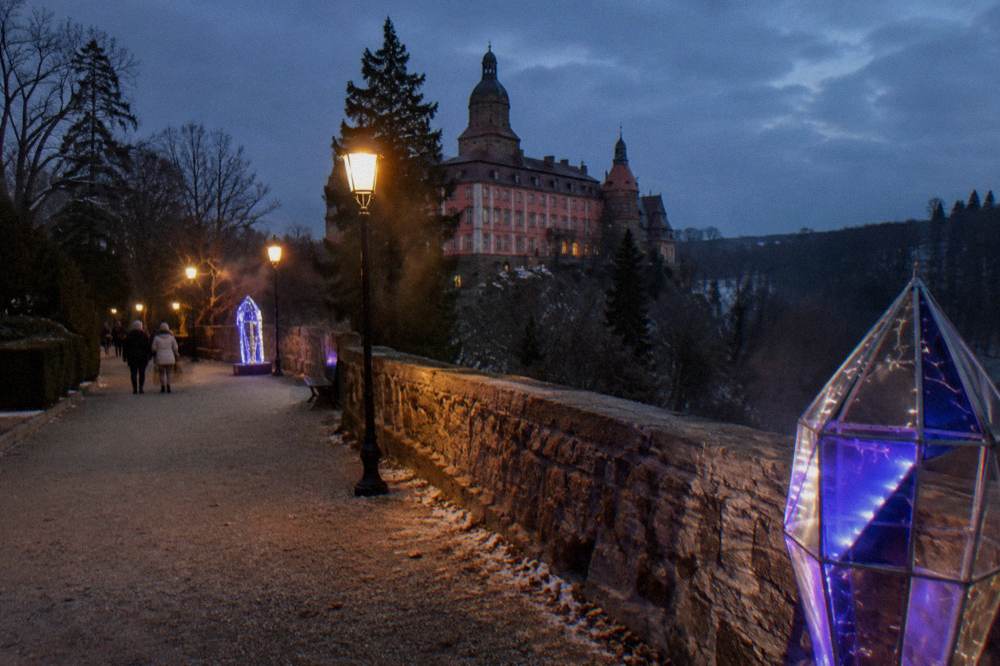
Winter reverses the equation. From 1 November to 28 February the Gardens of Light take over the terraces and Palm House gardens in the evenings, typically 17:00 to 20:00 Sunday to Thursday and 17:00 to 21:00 Friday and Saturday, with tickets at 45/39 PLN for the castle gardens, 35/30 PLN for the Palm House, or 65/55 PLN combined. The event leans into legends, including figures of Daisy herself, so in a curious way the princess is most theatrically present in the season when her gardens are least themselves. Hours are published monthly, and December to March daytime blocks had not been announced at the time of the current schedule, so check the castle site before a winter trip. Note also that on 1 November the castle and Palm House interiors close entirely, with only the evening lights event running.
| Season | What Shows Daisy's Legacy | Key Ticket (normal / reduced) |
|---|---|---|
| Late April to early May | Flower and Art Festival, 40+ spaces decorated | Festival tickets replace standard entry |
| Mid-April to September | Terraces with British-inspired planting, included with castle entry | Castle + Palm House 72 / 62 PLN |
| October | Terraces possible by management decision, autumn colour in the park | Castle + Palm House 72 / 62 PLN |
| November to February | Gardens of Light with Daisy-themed legend figures | Gardens of Light combined 65 / 55 PLN |
The castle's own pages are the source for the current Gardens of Light season details, and the monthly hours announcements there decide whether a given winter date works at all. Whichever window you choose, buy timed tickets online for the underground route if you plan to add it, since slots are guided and limited.
How Do You Plan The Day Around Her Castle?
Base the day on the castle complex itself, allow at least half a day, and arrive from Wroclaw by tour, train or car; the estate sits about 70 km southwest of the city inside the Ksiaz Landscape Park, close to the Czech border. The Palm House is about 2 km from the castle, roughly a 25 minute walk, and the stud farm and mausoleum sit about 900 m away, so the All Day Ticket at 104/94 PLN only pays off if you plan to move between them. Practical logistics, parking and entrances are covered in the guide to Ksiaz Castle parking and entrance, and the timing question, half day versus full day, has its own breakdown in half day or full day Ksiaz Castle trips.
Booking a tour rather than self-driving makes sense for the Daisy itinerary specifically because the castle's individual offer already includes an audio guide: your inside experience is identical either way, but the tour removes the ticket queue, the 70 km drive and the parking walk. Every tour on this site departs from Wroclaw, most with hotel pickup, and the durations run from about 5 hours up to full 9 to 10 hour days when the Church of Peace in Swidnica or Project Riese sites are added. The site's homepage at Ksiaz Castle Tours lists the full range for comparison, including combinations that stretch well beyond the castle itself.
Whatever the format, the honest framing is this: Daisy's story does not survive as a museum wing, it survives as atmosphere. The terraces, the baroque garden, the scale of the rooms and the audio guide's account of the last princess are what you get, plus the darker tunnel complex beneath, which belongs to a later and grimmer chapter that the same ticket can cover. The underground route runs about 40 minutes with a guide, holds a steady 6 C, and admits no children under 4, so dress warm and plan footwear accordingly. Readers who want that fuller arc should read the guide to Ksiaz Castle and Project Riese tours before choosing a longer option.
Three formats dominate the shortlist for a Daisy-focused day: the direct private tour, the Adrspach combination for a two-country adventure, and the skip-the-line private car with the broadest castle ticket coverage. All three can be checked in a minute, and all carry free cancellation per their listings, so the decision costs nothing to make.
Common Questions About Princess Daisy Of Pless
What Happened To Princess Daisy Of Pless?
Daisy, British-born and married to Hans Heinrich XV Hochberg, was the last mistress of Ksiaz Castle. The Second World War ended the family's tenure: the castle was seized, Project Riese drove tunnels beneath it, and the estate passed out of private hands. Today the City of Walbrzych owns the complex, and Daisy's legacy lives on mainly in the terraces she shaped with British gardeners and in the castle's storytelling.
Can You Visit Princess Daisy's Rooms At Ksiaz Castle?
Yes, in the sense that the castle interiors, including the representative rooms of the Hochberg era, are on the standard sightseeing route with an audio guide in English that covers the family's history. The visit is self-guided for individuals; Polish-language guided tours run daily at 11:00 and 14:00, and groups of 15 or more can book an English-language guide with advance notice.
What Did Princess Daisy Do For The Castle Gardens?
The castle's official history credits Daisy with hiring British gardeners who shaped the terraces that are now the estate's most photographed exterior feature. The terraces are generally open from about mid-April to the end of September and are included in the standard castle ticket; from November to February they host the TAURON Gardens of Light evening illuminations.
Which Tour From Wroclaw Best Follows Daisy's Story?
The From Wroclaw Ksiaz Castle Private Tour fits best: about 5 to 6 hours, hotel pickup, castle entry tickets and the interiors and gardens included, from $165. Because it focuses on the castle alone, it leaves time to walk the terraces and the Palm House rather than rushing off to a second destination.
Is The Daisy Story Told In English On Site?
Yes. Individual visitors tour the castle with an audio guide available in English, and Daisy and the Hochberg family feature throughout the narration. Daytime guided tours for individuals are Polish only, so English speakers should plan on the audio guide or a private tour, where the driver handles logistics while the castle's own audio guide carries the story inside.
When Should You Visit To See Daisy's Gardens At Their Best?
Aim for mid-April to September, when the terraces are open and included with castle entry. The flower festival in early May is the most spectacular period but replaces the normal self-guided visit with festival access. In winter the Gardens of Light run from 1 November to 28 February and include Daisy-themed legend elements, with evening hours typically from 17:00.