Who Owns Ksiaz Castle Now?
Ksiaz Castle belongs to the City of Walbrzych and is run by a municipal company. Here is how that ownership works, what it means for visitors, and how to see the castle today.
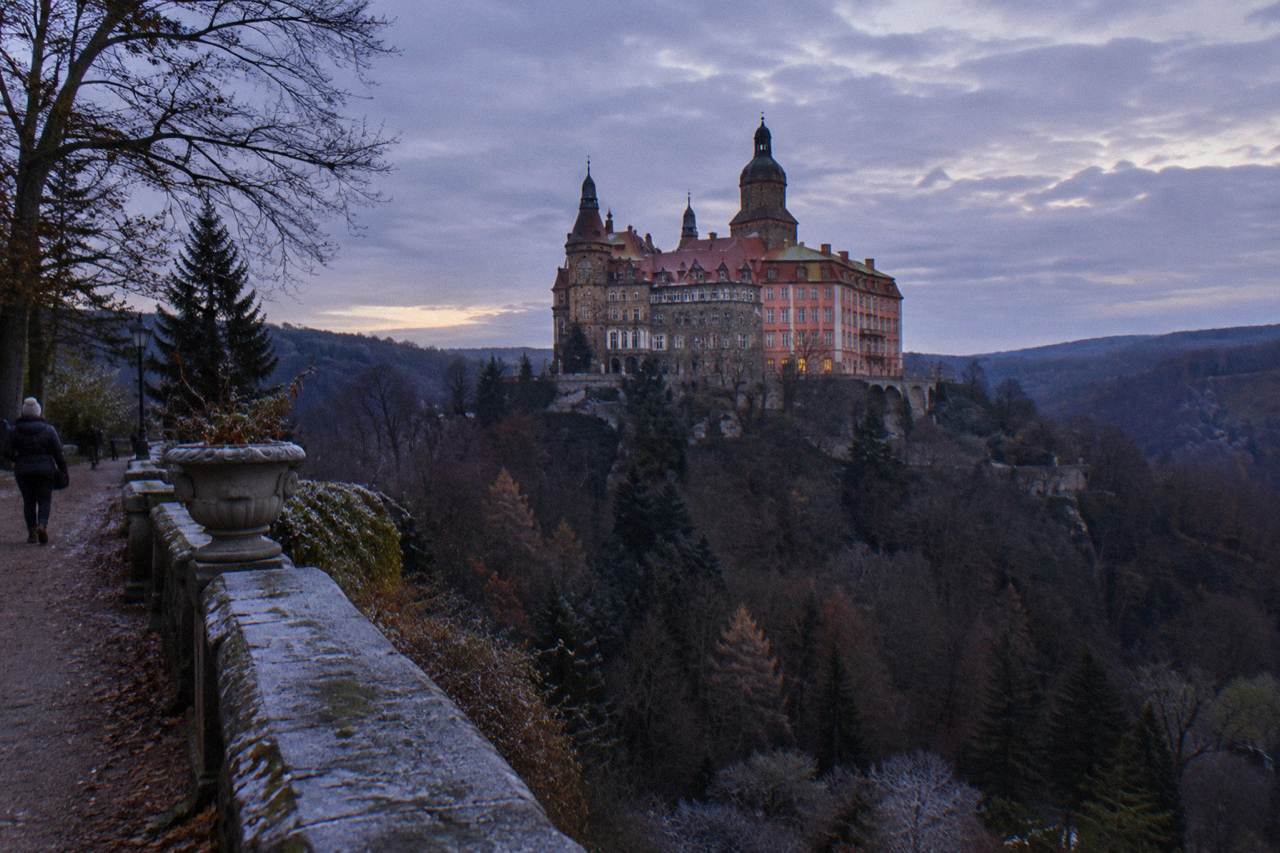
Ownership questions sound academic until you stand at the ticket office. Who owns Ksiaz Castle decides what the prices are, who sets the opening hours, why the underground route is guided, and why a city of about 108,222 people runs one of the largest castle complexes in Poland. The short answer is municipal, and the long answer runs from medieval dukes through one of Silesia's richest aristocratic families, a Nazi construction project, and a postwar handover. This page follows that chain and ends with the practical part: how the castle's public ownership shapes the visit, and which tours from Wroclaw get you through it.
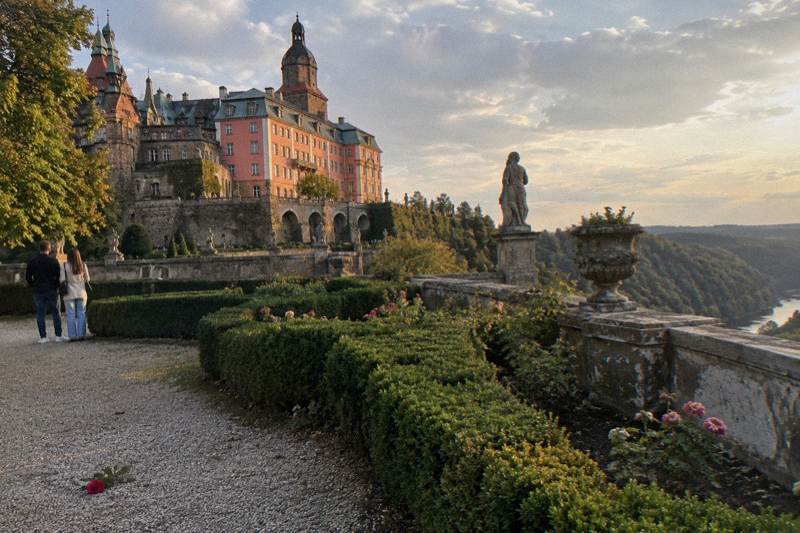
The City of Walbrzych owns Ksiaz Castle, and a municipal company operates it on the city's behalf. The castle and its surrounding parkland also sit inside Ksiaz Landscape Park, a protected area established in 1981 covering 31.55 square kilometres. So ownership is public, municipal and layered: the city holds the property, a city-run company runs the visitor operation, and the landscape park frames the whole estate.
That arrangement is more unusual than it first appears. Many of Europe's great castles are state property, run by a national heritage service, or they remain in aristocratic hands with the family opening the doors to fund the roof. Ksiaz took a different path. After the Second World War the estate passed out of the Hochberg family's world and eventually into the hands of a single, medium-sized Silesian city, Walbrzych, which lies about 70 kilometres southwest of Wroclaw and about 30 kilometres from the Czech border. The city did not just receive a monument; it received a working visitor attraction with roughly 400 rooms, terraces, a Palm House two kilometres away, a stud farm and a mausoleum within walking distance of the main gate.
The municipal operator behaves like a public institution in ways a visitor can feel. Ticket prices are published in zloty on the official castle sightseeing page, with a normal and a reduced rate for children, students, seniors and visitors with disabilities. Hours are posted as monthly blocks rather than a fixed yearly grid, so November 2026 shows castle interiors 10:00 to 16:00 on weekdays and 10:00 to 17:00 on weekends. The same operator runs the seasonal events, from the TAURON Flower and Art Festival in spring to the winter Gardens of Light, and it publishes a full price ladder for all of them.
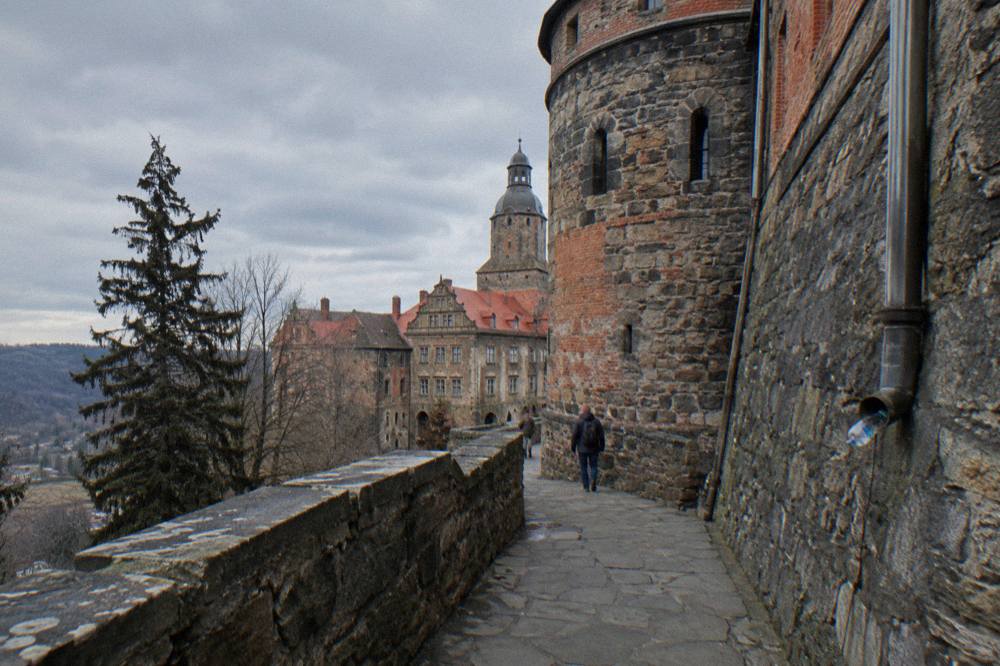
For travellers the ownership story matters because everything on the hill, tickets, tunnels, timed entries, the audioguide policy, flows from one city-run desk. If you want the fullest picture of the site's past before arriving, the castle's history on Wikipedia is a solid primer, and this site's own Ksiaz Castle history guide goes deeper into the Hochberg centuries.
Who Held The Castle Before The City?
The castle was built between 1288 and 1292 by Bolko I the Strict and first documented in 1293. From 1509 it belonged to the Hochberg family, who held it until the Second World War ended their tenure in 1945. The German name Schloss Fürstenstein dates from the family's long tenure.
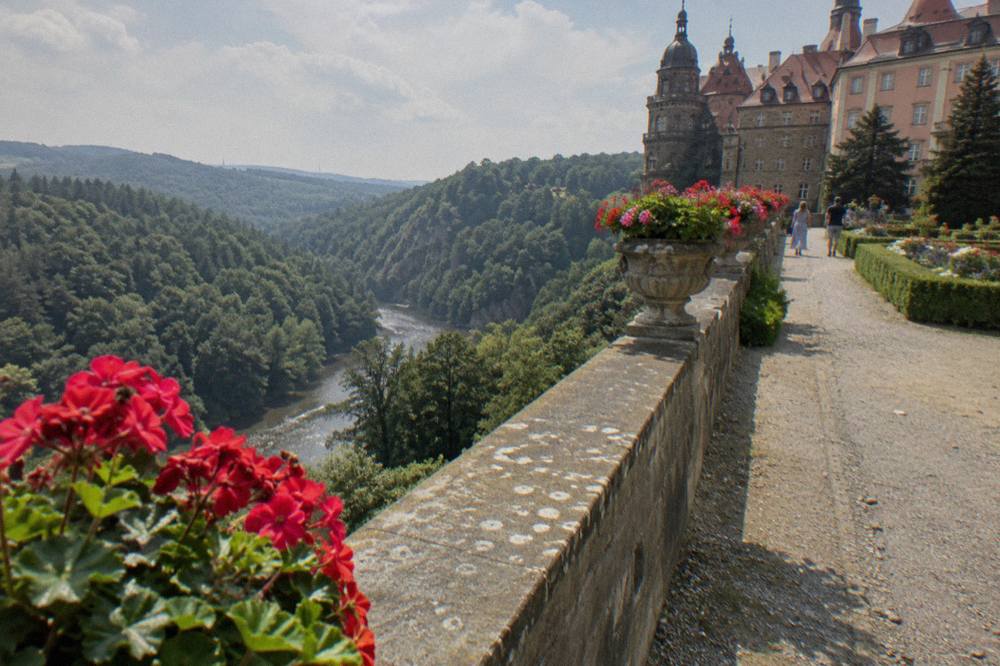
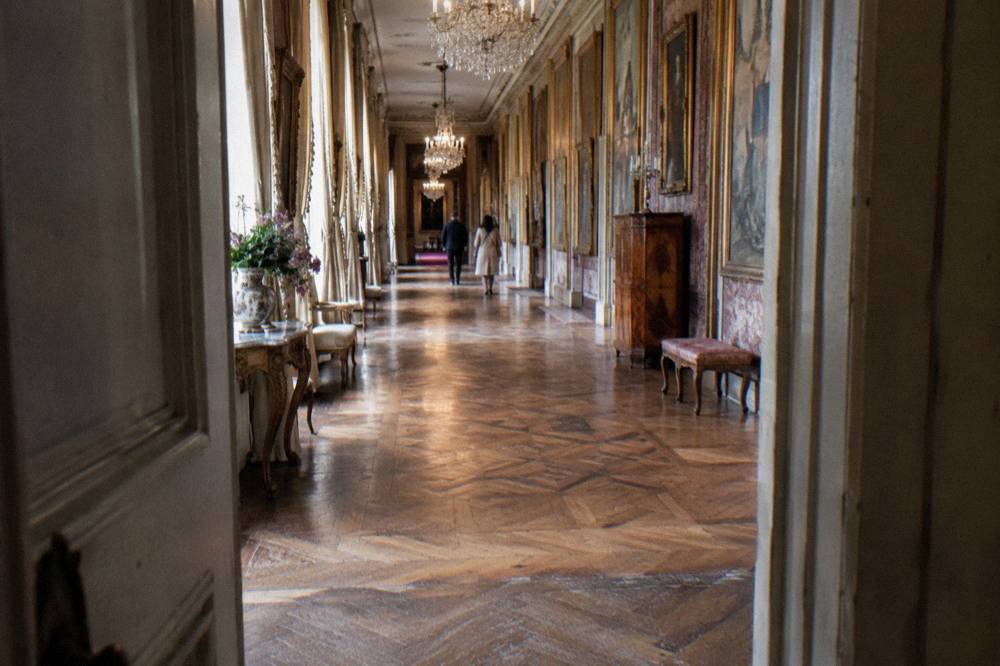
The Hochbergs were the making of the place. Konrad I acquired the estate in 1509, and over the following generations the family expanded a medieval fortress into one of the grandest residences in Silesia, a castle of roughly 400 rooms and about 11,000 square metres, the largest in Silesia and the third-largest in Poland after Malbork and Wawel. The most famous resident of the final era was Daisy, the British-born Princess of Pless, who married Hans Heinrich XV and left a visible mark on the estate; the official castle history credits the British gardeners she hired with shaping the terraces that visitors walk today. Her story has its own following, and this site covers it in what happened to Princess Daisy.
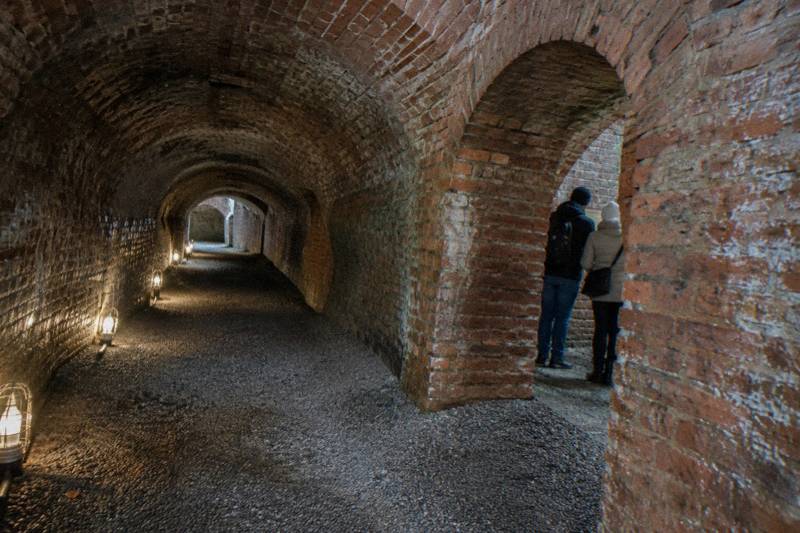
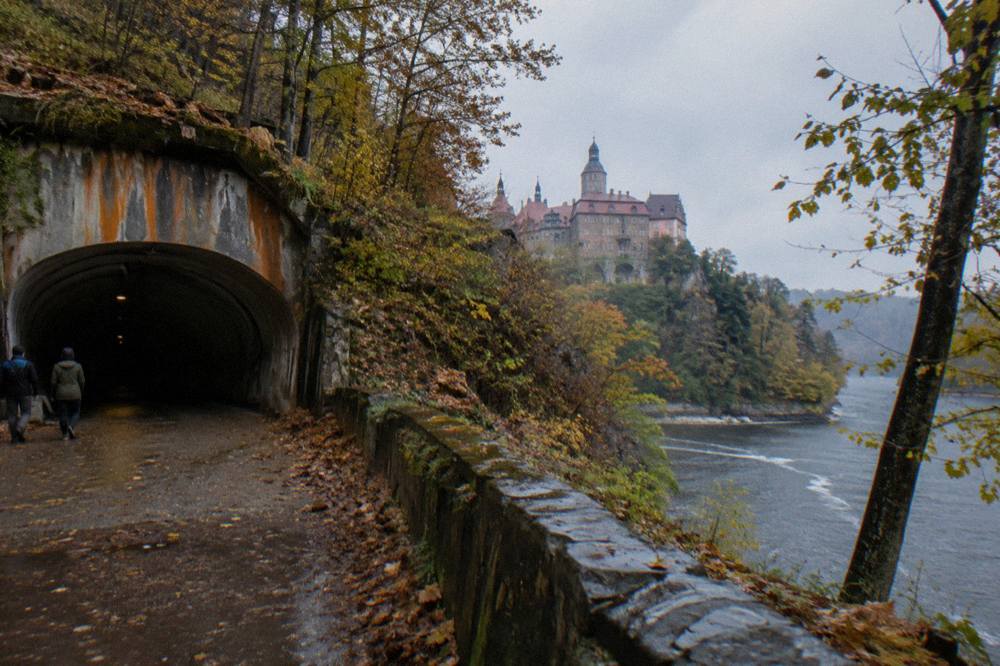
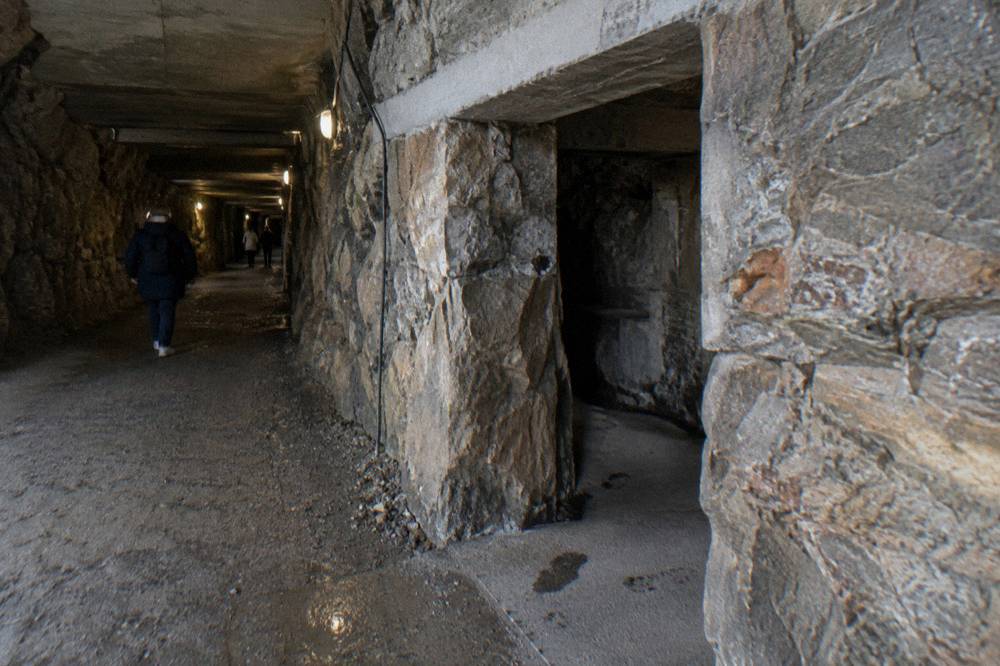
Then came the 1940s. Under the Nazi regime the castle was absorbed into Project Riese, a vast, secret construction programme running from 1943 to 1945 that drove tunnels beneath the castle and built underground complexes across the Owl Mountains, using forced labourers and prisoners of war under Organisation Todt, with Albert Speer's ministry involved. The work was never finished. The war's end swept the Hochbergs out, the German population of Silesia with them, and the estate into Polish public hands. Walbrzych, a coal and industry town rebuilding itself around the castle, is the heir of that handover, and the municipal company running the site today answers to the city council, not to any family or national ministry.
The layered ownership has one more layer worth naming: the castle sits inside Ksiaz Landscape Park, protected since 1981, which means the forested hillsides around the terraces are shielded from development regardless of who holds the buildings. Ownership of the view, in effect, is shared with everyone.
What Does City Ownership Mean For Your Visit?
Because a municipal company runs the castle, the visit is structured like a public attraction: published PLN prices, reduced rates with ID, monthly opening-hour blocks, timed guided entries for the underground route, and city-run seasonal events. A castle and Palm House ticket costs 72 PLN normal or 62 PLN reduced, and the full All Day Ticket covering everything costs 104 PLN or 94 PLN.
Public ownership shows up first in the pricing ladder. There is no dynamic surge pricing, no premium tier invented by a marketing department. The ladder is a public tariff, valid from 6 May 2026, and it reads like one:
| Ticket | Normal (PLN) | Reduced (PLN) |
|---|---|---|
| Castle with audioguide + Palm House | 72 | 62 |
| Castle + underground + Palm House | 92 | 82 |
| Castle + Stud Farm + Palm House | 79 | 69 |
| All Day Ticket (castle, terraces, underground, Palm House, Stud Farm, Mausoleum) | 104 | 94 |
| Underground route only (guided) | 45 | 39 |
| Palm House only | 27 | 21 |
Reduced rates apply to children from age 4, school pupils to 19, students to 24, pensioners and over-65s, and disabled visitors with carers, with identification. Children under 4 enter free. Non-guided tickets stay valid for 12 months from first use, though the castle entry itself is same-day, a generosity you would rarely find at a privately owned chateau racing to monetise every visit.
The second give-away is language policy. Daytime guided tours for individual visitors run in Polish only, at 11:00 and 14:00, because the operator is serving, first, a Polish public. Everyone else visits with an audioguide, in English or German among other languages. Foreign-language guided tours exist for groups booking 15 or more tickets with advance notice. A private tour from Wroclaw solves this neatly for English speakers, and several options exist; the Skip-the-line Ksiaz Castle from Wroclaw by Private Car trip, from $231 on the booking page, includes castle entry tickets and covers the interiors, the underground route and the Baroque garden, with hotel pickup in Wroclaw and a driver-guide in English, German or Polish.
The third sign of municipal stewardship is the events calendar. The city-run operator treats the castle as a cultural venue for the region, not just a monument. The 36th TAURON Flower and Art Festival, themed "Odyssey of Time", filled the castle with floral installations from 30 April to 3 May 2026 with over 100 florists across more than 40 spaces. The winter season brings the TAURON Gardens of Light, running 1 November 2026 to 28 February 2027, with illuminated terraces and Palm House gardens on Sunday to Thursday evenings from 17:00 to 20:00 and Friday to Saturday from 17:00 to 21:00, tickets at 45 PLN or 39 PLN for the gardens and 35 PLN or 30 PLN for the Palm House.
Is The Castle Estate Bigger Than The Castle?
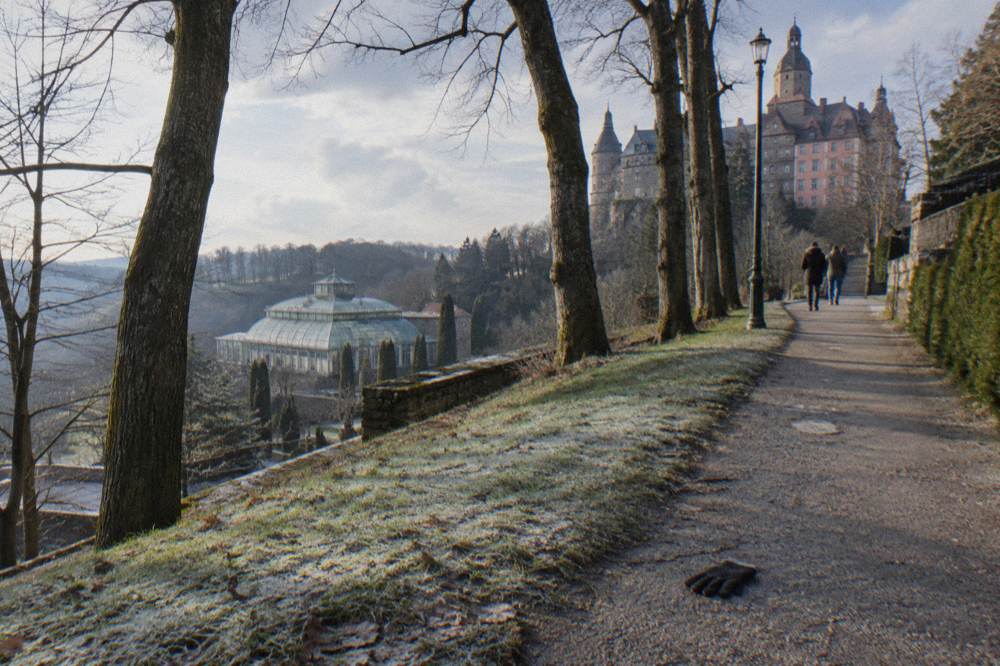
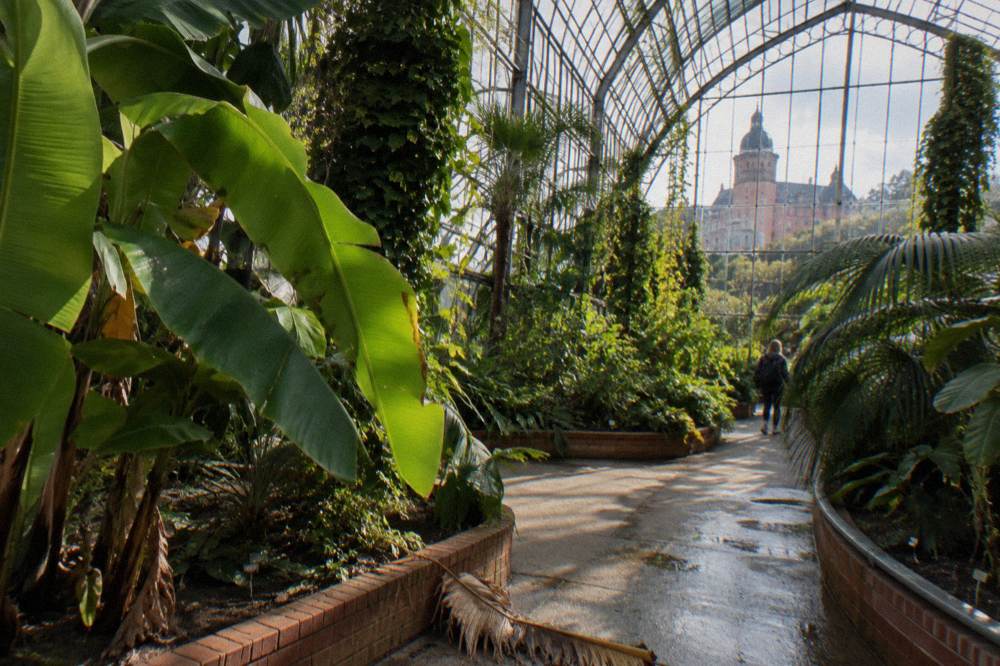
Yes, and this is where ownership gets practical. The municipal operation includes the Palm House on ul. Wroclawska about 2 kilometres from the castle, roughly a 25-minute walk, plus the Stud Farm and the Mausoleum, each about 900 metres from the main gate. The All Day Ticket strings all of them together.
Visitors often arrive thinking of Ksiaz as one building and leave having walked a small estate. The Palm House is a separate glasshouse attraction with its own ticket, its own opening hours, and in winter its own role as the second half of the Gardens of Light route. The Stud Farm, Stado Ogierow, is a working horse establishment you can add to a castle ticket. The Mausoleum, the Hochberg burial site, opens seasonally from 1 April to 15 October and closes from 1 November to 31 March, which is worth knowing before you promise anyone a complete estate walk in winter. The Explore Walbrzych ticket, at 139 PLN or 109 PLN reduced, stretches the definition of the estate further still, folding in the Old Mine and the Porcelain Museum in town along with the castle, terraces and Palm House. More of these guides are collected on Ksiaz Castle Tours.
The scale is the reason duration questions matter more than people expect. This site's how long to visit Ksiaz Castle guide breaks down realistic timings, but the headline is that the castle alone plus the underground route plus the Palm House is a five-to-six-hour proposition once travel from Wroclaw is counted. The underground route itself, about 40 minutes, guided, at a steady 6 degrees, requires warm clothing and flat shoes, and children under 4 are not admitted. Timed entries mean the day has a schedule whether you planned one or not.
How Do Tour Operators Fit Into A Publicly Owned Castle?
Private tour operators do not own or run any part of the castle; they buy tickets like everyone else and sell transport, guiding and logistics around a municipal attraction. That is why tour inclusions differ so sharply: some include castle entry tickets, some leave them to be paid on site, and the listing states which is which.
This is the single most useful thing to understand when comparing Wroclaw day trips. The castle's public tariff does not move for anyone. What varies is the wrapper: the car, the driver, the guide, the route, and whether entry tickets are bundled. The eight-hour Jewels of Lower Silesia style small-group tour from Wroclaw, rated 4.8 across 117 reviews, from $145 per person, includes castle entry and covers the interiors, the tunnels and the Palm House alongside the UNESCO Church of Peace in Swidnica. The six-hour Lower Silesia group tour, rated 4.4 across 46 reviews from $218 per person, adds hotel pickup and Swidnica's market square but leaves ticket inclusion unstated, so the booking page is the place to confirm. A private option, the Ksiaz Castle and Swidnica Church of Peace tour from $175, rated 4.7 across 43 reviews, includes both castle tickets and hotel pickup.
| Tour from Wroclaw | Duration | Reviews | Price | Entry tickets |
|---|---|---|---|---|
| Ksiaz Castle, Tunnels & Church of Peace (small group) | about 8 hours | 4.8 from 117 | from $145 per person | Included |
| Lower Silesia, Ksiaz Castle & Church of Peace | about 6 hours | 4.4 from 46 | from $218 per person | Not stated on the listing |
| Ksiaz Castle & Swidnica Church of Peace (private) | 5 to 7 hours | 4.7 from 43 | from $175 | Included |
| Skip-the-line Ksiaz Castle by Private Car | 5 to 6 hours | 4 reviews | from $231 | Included |
| Project Riese and Ksiaz Castle (private) | 7 to 8 hours | 4.8 from 42 | from $198 | Included |
The table's lesson is that price and inclusion do not move together. The most reviewed option is also one of the cheapest, because a shared minibus and a fixed meeting point at Cinema Nowe Horyzonty in central Wroclaw keep costs down. Private tours cost more per booking and buy flexibility instead: hotel pickup, your own pace, and in the Project Riese combination, rated 4.8 across 42 reviews and from $198, a route that pairs the castle with the Osowka underground complex, where the history beneath Ksiaz continues in the Owl Mountains. For a deeper look at that itinerary, see the Ksiaz Castle and Project Riese tour guide.
One caution the ownership question makes obvious: because the castle is publicly run, no operator can promise you queue-free entry in absolute terms. Skip-the-line products mean tickets are arranged in advance and you arrive with them in hand, which in practice removes the ticket-office wait. That is the honest version of the claim, and it is the version the good operators make.
Who Looks After The Castle's Wartime History?
The municipal operator presents the Nazi-era tunnel network beneath the castle as history, not mystery: a 1.5-kilometre underground route, reinforced with concrete, ending at a collapsed elevator shaft, telling the story of the forced labourers who dug it. Respectful, factual interpretation is official policy, and it extends to the memorial sites nearby.
Project Riese was built by people who did not survive it. Thousands of forced labourers and prisoners of war died across the Owl Mountains complex between 1943 and 1945, and the prisoners came from Gross-Rosen concentration camp subcamps. The castle's own underground text, and the Gross-Rosen Museum at Rogoznica, about an hour's drive from Wroclaw, present that record plainly. The museum is free to enter for individuals, open 8:00 to 18:00 from May to September and 8:00 to 16:00 from October to April, and groups of 10 or more must hire a guide service. A full wartime day trip combining Riese sites, Gross-Rosen and Ksiaz runs about 9 to 10 hours from Wroclaw, rated 4.8 across 19 reviews, from $253 per person.
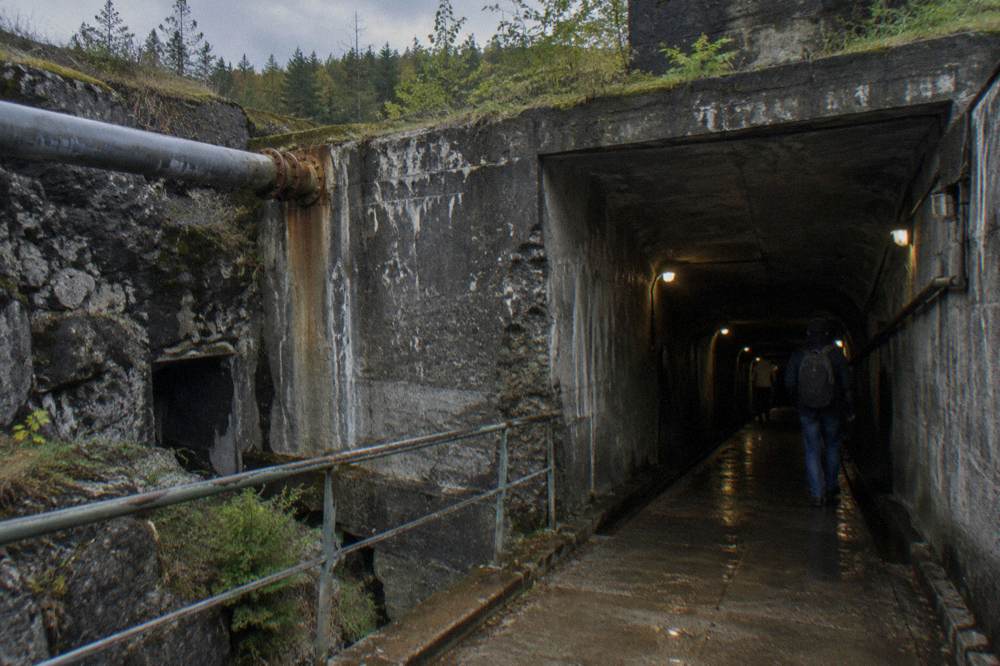
The ghost-train and gold-train legends that swirl around Walbrzych are a separate genre, and the castle's public custodians keep their distance from it. That restraint is itself a consequence of ownership. A private owner has every incentive to lean into a treasure legend; a city running a civic monument has an incentive to tell the documented story. Readers curious about the legend can weigh it in the Nazi gold train story, but the tunnels you actually walk are explained by construction, forced labour and an unfinished purpose.
How Should You Actually Book A Visit?
Decide first whether you want independence or a wrapper. Independent travel means a train or bus to Walbrzych and castle tickets bought online for timed underground slots; a tour means pickup in Wroclaw, transport, and often entry tickets bundled. Private car options run from $165, small-group tours from $145 per person, and both styles carry free cancellation per their listings.
The ownership context makes the independent route unusually workable, because a public attraction publishes everything. The castle's official English sightseeing page lists prices and rules, hours appear in monthly news posts, and timed underground tickets can be bought online. The trade-off is logistics: the castle sits above Wałbrzych, and reaching it by public transport from the station adds friction to an already long day. This site's Wroclaw to Ksiaz Castle by train, bus and car guide walks through each option in detail.
The tour route trades that friction for cost and company. For travellers who want the castle handled end to end, the From Wroclaw: Ksiaz Castle Private Tour, from $165, covers about 5 to 6 hours with hotel pickup and castle entry tickets included, though the castle guide itself is not part of that package; you tour the interiors and gardens with transport and tickets arranged. The Skip-the-line Ksiaz Castle by Private Car option, from $231, is the same idea with a broader sweep, adding the underground route, the Baroque garden and the Palm House in one 5-to-6-hour loop.
Travellers with more than a castle day to spend can stretch the same logic across the region. The Wroclaw to Rock City in Adrspach and Ksiaz Castle day trip, rated 5.0 across 26 reviews and from $200, crosses into Czechia for the sandstone rock labyrinths of Adrspach before returning to the castle, a roughly 9-hour day with entry tickets and hotel pickup included. It is a reminder that whoever owns the castle, the countryside around it belongs to everyone.
Ksiaz Castle Tours exists because ownership turned this hill into something a city shares with strangers: a published tariff, monthly hours, timed tunnels, and a fleet of Wroclaw operators wrapping it in comfortable day trips. Whether you arrive by train with a printed ticket or by private car with everything arranged, you are, in the end, a guest of the City of Walbrzych.
Common Questions About Who Owns Ksiaz Castle Now?
Who Owns Ksiaz Castle Now?
The City of Walbrzych owns the castle complex, and a municipal company operates it. The estate also lies within Ksiaz Landscape Park, a protected area established in 1981.
Was The Castle Ever Privately Owned?
Yes, for most of its life. Built by Bolko I the Strict between 1288 and 1292, it belonged to the Hochberg family from 1509 until the Second World War ended the family's tenure.
Does The City Set The Ticket Prices?
Effectively, yes. The municipal operator publishes a price ladder in PLN, including reduced rates for children, students, seniors and visitors with disabilities, and seasonal pricing for events like the winter Gardens of Light.
Can A Private Company Run Tours Inside The Castle?
Private operators sell transport, guiding and bundled entry tickets, but the castle itself remains a municipal attraction. Tour listings state whether entry tickets are included or paid separately.
Who Maintains The Palm House And The Tunnels?
The same municipal operation runs the Palm House, about 2 kilometres from the castle, the underground Project Riese route beneath it, and the Stud Farm and Mausoleum on the wider estate.