Is The Church Of Peace In Swidnica Worth Visiting?
Yes: the Swidnica Church of Peace is the largest timber-framed church in Europe, a UNESCO World Heritage Site since 2001, and an easy pairing with Ksiaz Castle on a single day trip from Wroclaw.
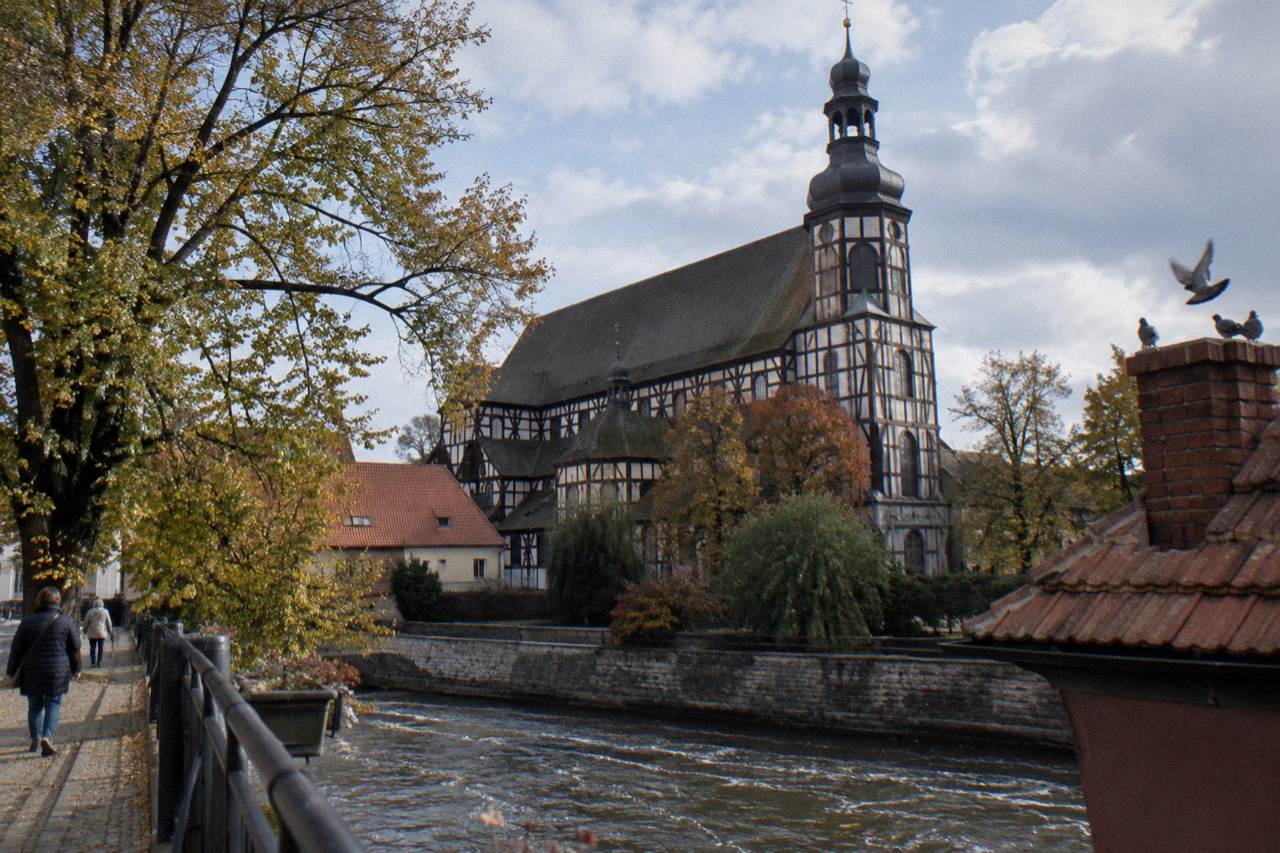
Yes, for almost every traveller. The Church of Peace in Swidnica is the largest timber-framed religious building in Europe, inscribed on the UNESCO World Heritage List in 2001, and its painted interior is unlike anything else in Poland. It sits about an hour from Wroclaw by road, which makes it a natural half of a day trip that also takes in Ksiaz Castle. If you're basing yourself in the city first, our honest verdict on Wroclaw as a city break covers what to see in the city itself and how this day trip fits into a longer stay.
The honest framing is this: almost nobody comes to Swidnica for the town alone, and almost nobody leaves disappointed by the church. Visitors arrive because the building is one of only two surviving Churches of Peace in the world, this one and its sister in Jawor, both raised after the Peace of Westphalia allowed Silesian Protestants limited places of worship. The conditions attached to that permission shaped everything strange and wonderful about the building, and understanding them is what turns a quick photo stop into a memorable hour.
The reason most readers of this site end up in Swidnica is the pairing. Ksiaz Castle lies roughly halfway between Wroclaw and Swidnica, so the three points form a natural triangle that tour operators have been combining for years. If you would rather build your own day than join a group, our breakdown of travel time from Wroclaw to Ksiaz Castle helps you decide whether driving yourself is realistic.
The site's dedicated guide to the Swidnica Church of Peace covers the building itself in depth, and the Ksiaz Castle and Church of Peace day trip guide handles the combined itinerary hour by hour. What follows here is the value judgement: whether the church justifies the detour, how long it deserves, and which touring format gets the balance right.
What Makes The Church Of Peace So Unusual?
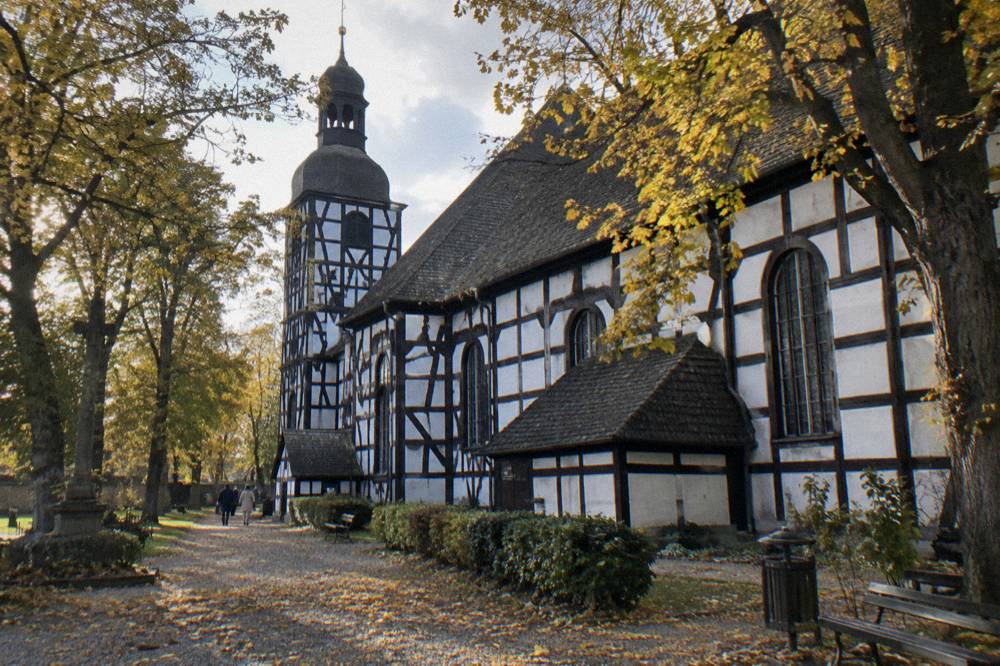
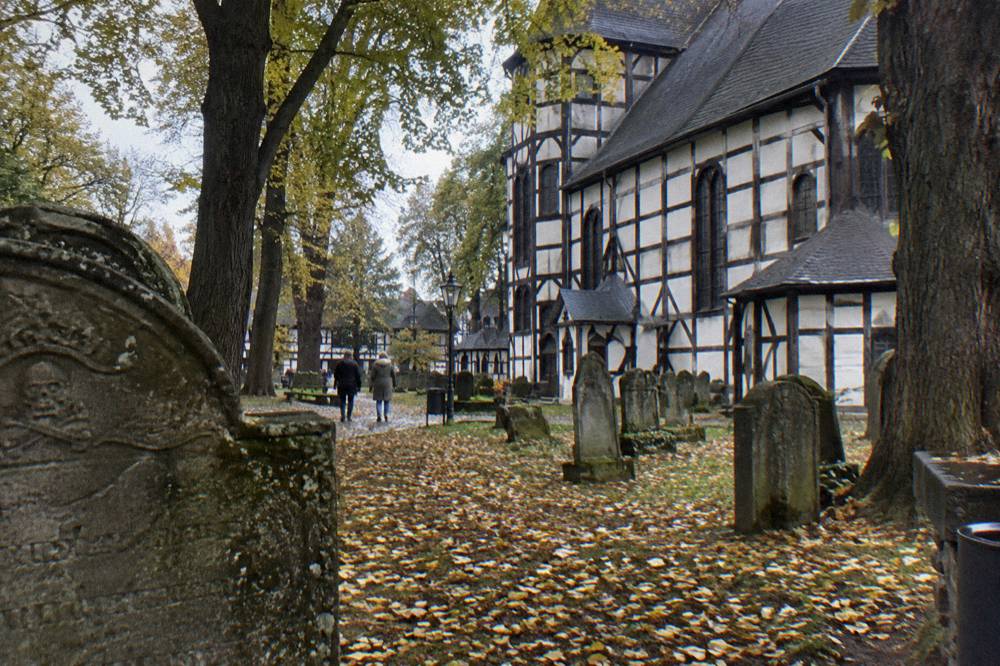
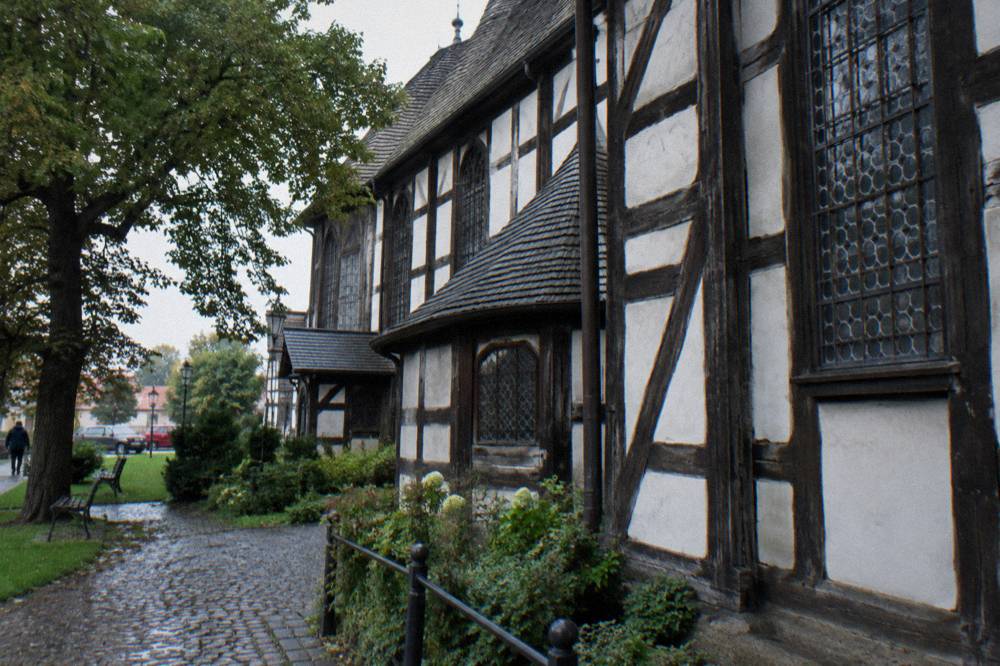
The building exists only because of a bargain struck in the Peace of Westphalia, which permitted Protestant churches in Silesia under deliberately punishing conditions. They had to be built outside city walls, within one year, using only wood, clay and straw, without towers or church bells. Swidnica's congregation answered with an engineering feat, and the result is the largest timber-framed church of its kind in Europe, listed by UNESCO in 2001.
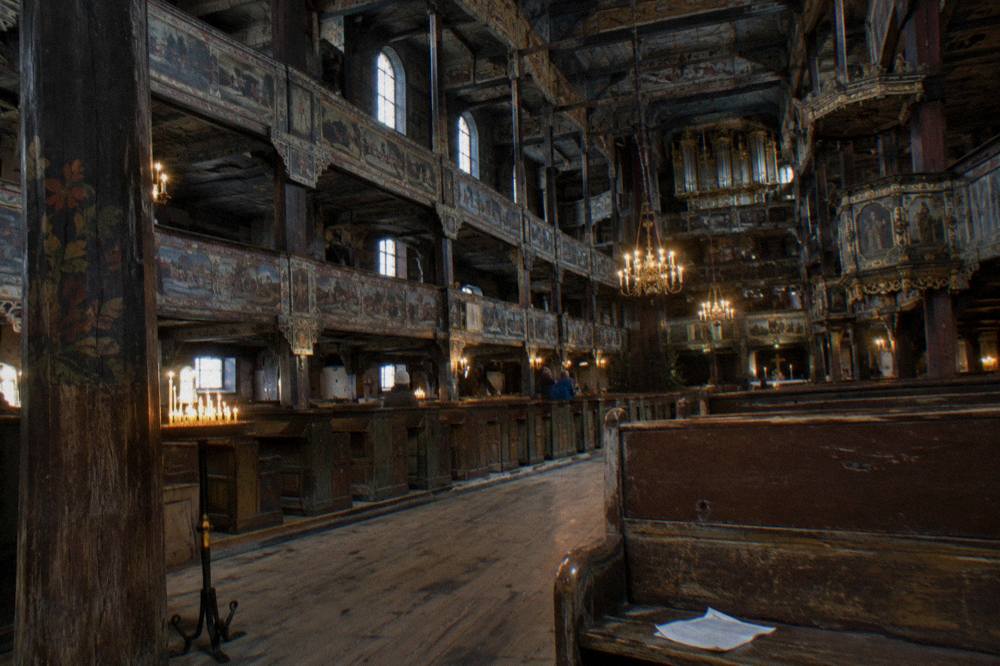
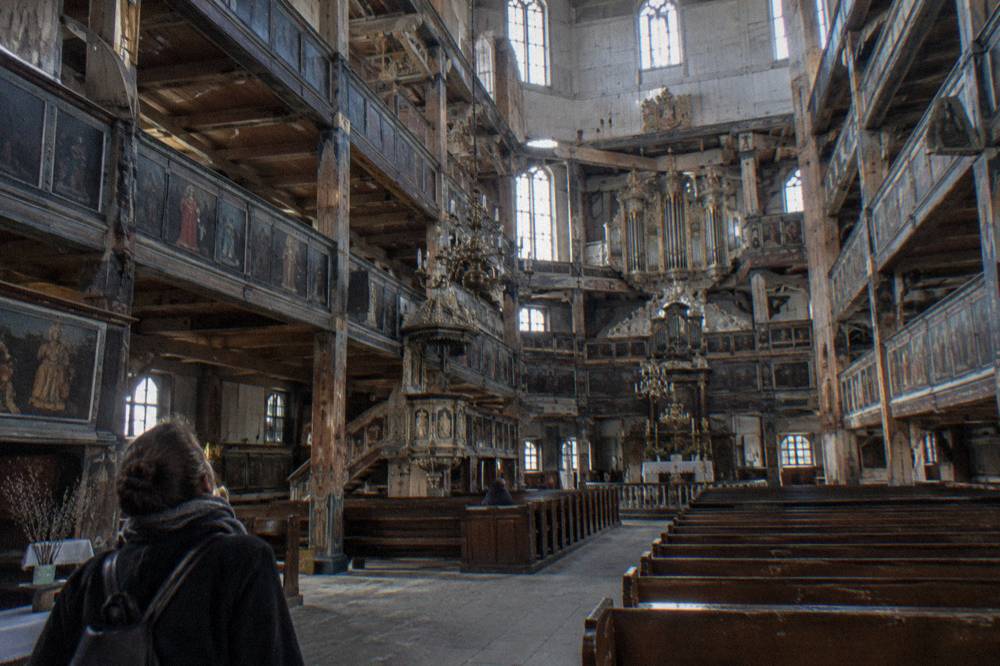
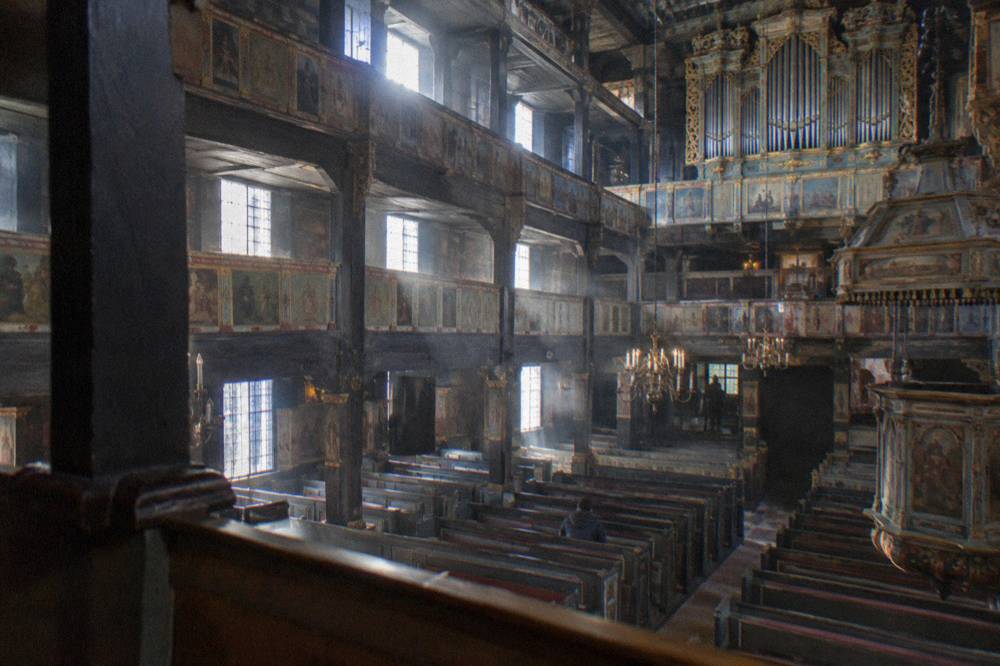
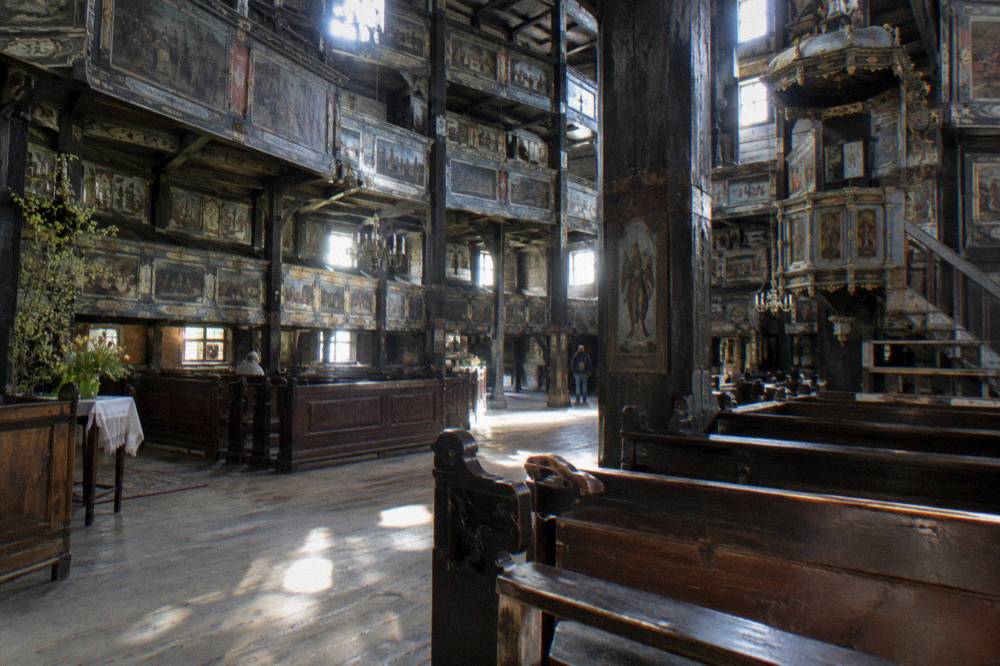
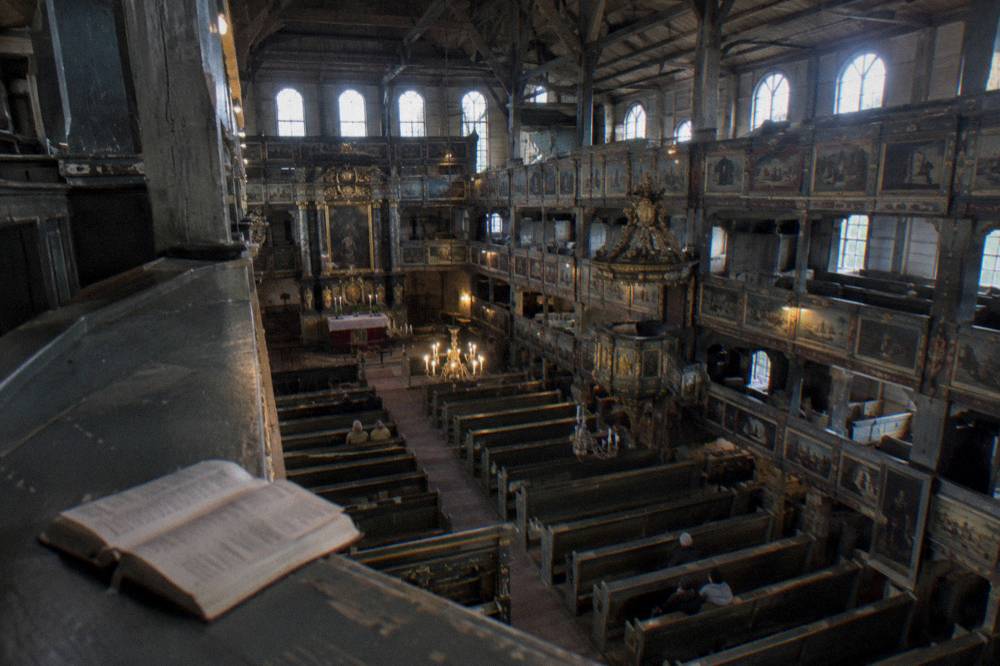
Those constraints explain the architecture. The walls are timber-framed and filled with clay, the structure leans on ingenious carpentry rather than stone vaults, and the silhouette is deliberately domestic, more great barn than cathedral. Yet the interior is anything but humble. When you step inside, the space opens into a painted amphitheatre of four tiers of galleries wrapping the nave, their balustrades and columns covered in paintings of biblical scenes, civic life and heraldry added by generations of townspeople after the building went up.
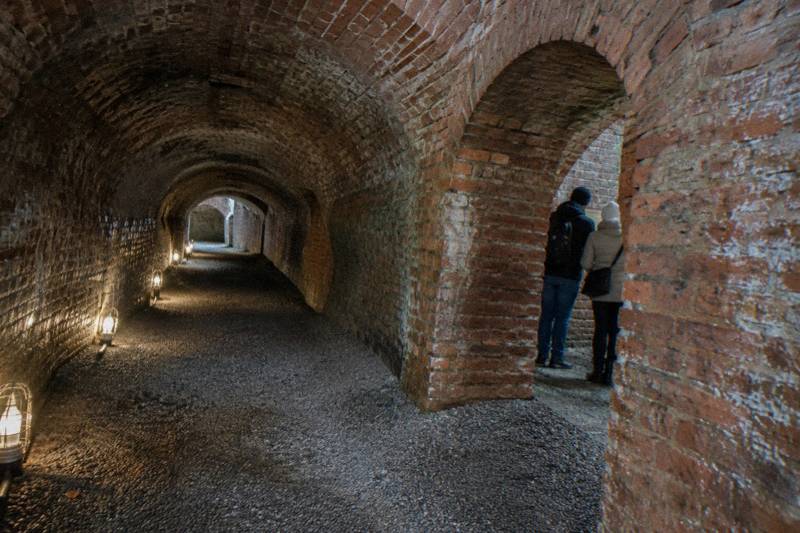
“It was a very pleasant ride out to the castle. We had a wonderful time there our driver give us extra time to do the underground. He was very respectful safe driver would highly recommend.”
The scale is the part that photographs fail to convey. The church can hold several thousand people, and the galleries climb so high that the ceiling feels like the inside of a wooden ship turned keel-up. Because timber structures of this age are inherently fragile, and because fire was the constant historical enemy, the simple fact that the building survived the wars fought across this exact region is part of its emotional weight.
The two Churches of Peace, in Jawor and in Swidnica, were jointly inscribed on the UNESCO World Heritage List in 2001, as the UNESCO listing record documents. Only these two remain of the three originally built, which is worth remembering when a guide calls the building unique. It is one of two, and the Swidnica church is the larger one.
Visitors weighing the detour should also know what the church is not. It is not a museum with roped-off rooms, and it is not a full-day attraction on its own. The painted galleries reward slow looking for perhaps an hour, and the surrounding old town adds a short walk, a market square and a coffee. The value comes from concentration: an hour inside delivers more per minute than almost any other sight in the region outside Wroclaw's own old town.
How Much Time Do You Need In Swidnica?
Plan on 60 to 90 minutes inside the church itself, plus 30 to 60 minutes for the walk from parking, the market square and a refreshment. Tour itineraries consistently budget between one and two hours in Swidnica, and the paired day trips from Wroclaw run about five to eight hours door to door depending on the format.
The time inside divides into three parts. The first impression takes about ten minutes and is mostly standing still. The second half hour is gallery walking and reading, because the paintings reward close attention: donor portraits, town views, allegorical figures and scenes painted across the balustrades in sequences. The final stretch is usually the tower viewpoint and the small exhibition areas, where opening arrangements can vary by season, so treat interior access to every corner as a bonus rather than a promise.
Independent travellers should budget for friction that tours absorb. Parking near the church involves a walk, signage in the old town is partly Polish-only, and opening arrangements can differ between the church and its tower. If you are driving yourself, an honest Swidnica allowance is two hours including parking and the square, which is why the paired itineraries work so well as packages: they convert two fiddly stops into one flowing day.
The durations quoted by the current tour options tell their own story about pacing. The small-group Ksiaz Castle, tunnels and Church of Peace tour runs about 8 hours from its central Wroclaw meeting point. The Lower Silesia tour with hotel pickup runs about 6 hours and adds the Palm House and Swidnica Market Square. The private Ksiaz Castle and Swidnica tour lists a 5 to 7 hour range, which reflects what private pacing actually means: the same sights, compressed or stretched around what interests you.
| Tour format | Duration | Start | Group size | Price basis |
|---|---|---|---|---|
| Small group, castle tunnels included | about 8 hours | Central Wroclaw meeting point | max 8 | from $145 per person |
| Hotel-pickup group tour | about 6 hours | Wroclaw hotel pickup | max 15 | from $218 per person |
| Private tour | 5 to 7 hours | Wroclaw hotel pickup | your party | from $175, basis on the booking page |
How Do You Get From Wroclaw To Swidnica?
By road, Swidnica sits about 50 to 60 km southwest of Wroclaw, roughly an hour's drive, and Ksiaz Castle in Walbrzych lies conveniently close to the direct route. Every touring option currently serving the church departs from Wroclaw with hotel pickup or a central meeting point, which is why the combined day trip is the dominant way to visit.
Driving yourself gives you the triangle in whichever order you prefer, and the roads are ordinary regional routes rather than mountain passes. The complication is not distance but logistics at each end: Wroclaw departure traffic, parking at the castle, where the parking sits relative to the entrance, and parking again in Swidnica. The site's guide to getting from Wroclaw to Ksiaz Castle works through those details, including the train option to Walbrzych on the regional railway, though onward connections from Walbrzych to Swidnica add a second leg that most independent travellers find tiresome.
Public transport to Swidnica exists but is not the natural choice for a castle-plus-church day. The train gets you to Walbrzych comfortably; completing both sights by rail and local bus in one day is possible in principle and exhausting in practice. Tour operators fill exactly this gap, and the tours reflect it: no current Swidnica option starts anywhere but Wroclaw, and most include pickup.
For visitors already sleeping in Wroclaw, the arithmetic is friendly. A tour that leaves mid-morning, spends time at Ksiaz Castle, continues to Swidnica for the church and the market square, and returns by early evening still leaves room for dinner in Wroclaw's old town. That shape of day is the single strongest argument for treating the church as a half-day excursion stitched onto the castle rather than a standalone pilgrimage.
Which Tours Pair The Church With Ksiaz Castle?
Three current formats dominate: a small-group eight-hour tour from $145 per person including castle entry, a six-hour hotel-pickup group tour from $218 per person, and a private tour from $175 with castle tickets included and a 5 to 7 hour window. All three list free cancellation, and all three visit the same two headline sights with different pacing and extras.
The small-group option, From Wroclaw: Ksiaz Castle, Tunnels and Church of Peace, is the most reviewed of the three at 117 reviews with a 4.8 rating, and it is the only one that puts the castle's underground tunnels on the fixed route alongside the church. The listing notes a maximum of 8 travellers, entry tickets included, and a fixed meeting point at Cinema Nowe Horyzonty on Kazimierza Wielkiego in central Wroclaw. Lunch is not included, which matters for an eight-hour day: plan food around the Swidnica stop, where the market square has cafés.
The six-hour Lower Silesia tour appeals to travellers who want pickup at the door and a slightly wider sweep, adding the Palm House at Wałbrzych and Swidnica's Market Square to the two headline stops. It runs with up to 15 participants and is rated 4.4 across 46 reviews. One honest caveat: the listing does not state that entry tickets are included, so check the inclusions on the booking page before assuming castle entry is covered.
The private option, From Wroclaw: Ksiaz Castle and Swidnica Church of Peace, is the format most readers weighing the "worth it" question end up choosing, and it earns it: hotel pickup in Wroclaw, castle entry tickets included, a 4.7 rating across 43 reviews, and a from price of $175 with the group basis shown on the booking page. Private pacing means the five to seven hour window flexes around whether you linger in the castle gardens or push straight to Swidnica. Food, drinks and local guides are listed as not included.
Choosing between them comes down to three questions. Do you want the tunnels? The small-group tour is the reliable way to get them. Do you want zero logistics? The pickup tours win. Are you a family or a group of four who value schedule control? The private tour's economics improve with every additional person in your party, and the included castle tickets remove one line and one decision from the day.
What Should You Expect From The Combined Day?
Expect a full but comfortable day built around two contrasting sights: a vast hilltop castle with layered history, then an intimate timber church whose whole point is what its congregation did without. The drive between the two is short, and most itineraries break the day with time in Swidnica's market square before returning to Wroclaw.
The contrast is the quiet strength of the pairing. Ksiaz Castle is about scale and power: the largest castle in Silesia, built from 1288 to 1292 by Bolko I the Strict, later the seat of the Hochberg family from 1509, with about 400 rooms across roughly 11,000 square metres, per the castle's historical record. The Church of Peace is about constraint and ingenuity, a building raised quickly from forbidden materials under an empire's restrictions. Doing both in a day gives you aristocratic ambition and congregational defiance in a single arc, which is a better story than either sight tells alone.
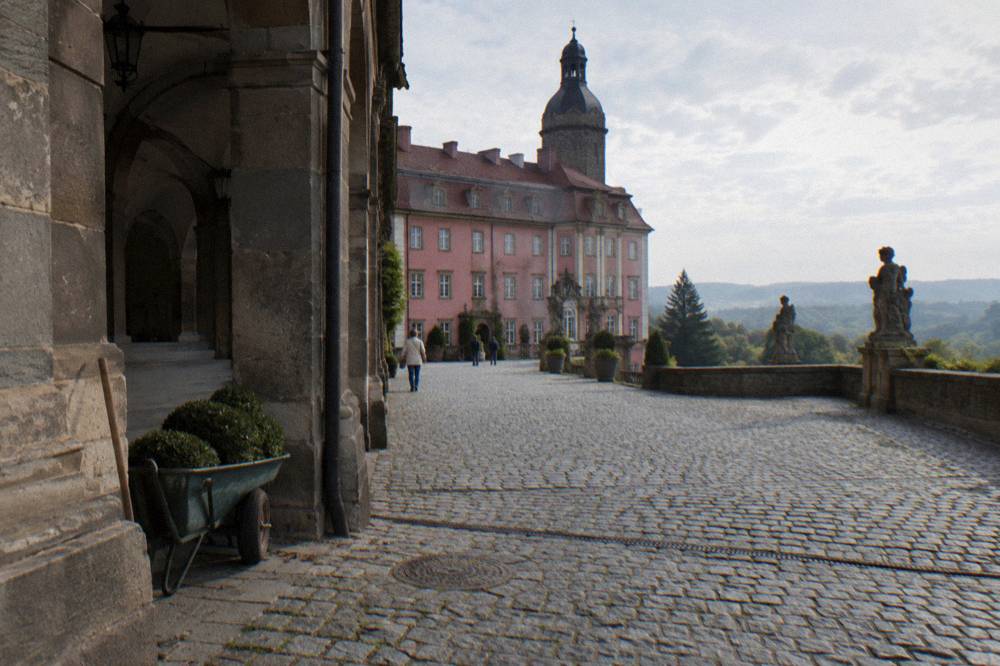
Timing through the castle depends on the ticket you hold or the tour you bought. Individual daytime visits use an audio guide, since the guided tours for individuals at the castle run in Polish only at 11:00 and 14:00, with English and German served by audio guide. The underground route is a separate guided experience of about 40 minutes at roughly 6 degrees Celsius, so a layer and closed shoes serve you well there; the site's underground tunnels guide covers the specifics.
A practical note on seasons, since the castle publishes hours by period rather than by fixed season. In November 2026 the castle interiors open 10:00 to 16:00 on weekdays and 10:00 to 17:00 on weekends, with the Palm House daily 10:00 to 16:30, and the current official castle sightseeing page posts each new block monthly. From 1 November 2026 to 28 February 2027 the evening Gardens of Light illuminations run on the terraces, an appealing bonus if your day trip runs late. Tour operators track these blocks, which is one quiet advantage of booking a guided day in winter.
Lunch is the main unscheduled element. Most listings exclude food, and most itineraries time the Swidnica arrival around midday or early afternoon, which is convenient: the market square beside the church is the natural place to eat, and 45 minutes for a bowl of soup and a coffee is usually enough before the return leg.
When Is The Best Time To Visit The Church Of Peace?
Weekday mornings are the quietest window, and late spring through early autumn gives the most comfortable conditions for the market square and the drive. The church itself is an all-weather sight, which is exactly why it anchors so many itineraries year round, and winter visits pair naturally with the castle's evening light installations.
Crowds follow the tour buses, and the buses follow a predictable rhythm. Mid-morning through early afternoon is when the combined tours from Wroclaw arrive, so a self-guided visitor who reaches Swidnica at opening time or after 15:00 often has the galleries closer to themselves. Photographers should note that the painted interior reads best with daylight through the windows, favouring the middle of the day over early evening in winter.
The surrounding town is small enough that weather shapes the whole stop. The walk from outlying parking, the square, and any terrace seating all improve in the warmer months. That said, nothing about the church itself depends on the season, and the winter case is stronger than it first sounds: the castle's daytime hours shorten in November, the Gardens of Light run from 17:00, and a well-timed tour can deliver the church by daylight and the illuminated terraces by dark.
| Season | Church experience | Swidnica town | Notes for the pairing |
|---|---|---|---|
| Spring | Comfortable, daylight late | Pleasant square time | Flower festival period falls around early May at the castle |
| Summer | Busiest midday hours | Full café life | Book tours ahead; castle hours run longest |
| Autumn | Quieter weekdays | Atmospheric | October colours in the castle park; hours shorten late month |
| Winter | Uncrowded, dim interiors early | Short outdoor stops | Castle interiors from 10:00; Gardens of Light from 17:00 |
One scheduling trap deserves a flag: Polish public holidays compress everything. On 1 November the castle and Palm House interiors are closed and only the evening light event runs, so a combined day trip planned around that date becomes a church-only day. Similar single-day adjustments appear through the calendar, and the castle announces them monthly. Tour operators reroute around these dates, but independent planners should check the official announcements before locking a date.
Common Questions About The Church Of Peace In Swidnica
Is The Church Of Peace In Swidnica Worth Visiting?
Yes. It is the largest timber-framed church of its kind in Europe, a UNESCO World Heritage Site since 2001, and its painted galleries are among the most distinctive interiors in Poland. An hour inside is enough to see it well, and it combines naturally with Ksiaz Castle on a single day trip from Wroclaw.
How Long Should I Spend At The Church Of Peace?
Between 60 and 90 minutes inside, plus time for the market square. Tours typically budget one to two hours in Swidnica, and the full paired day trips from Wroclaw run about five to eight hours depending on the format.
Can You Visit The Church Of Peace And Ksiaz Castle In One Day?
Yes, easily. Ksiaz Castle lies close to the route between Wroclaw and Swidnica, and multiple tours combine the two. Options include an eight-hour small-group tour from $145 per person, a six-hour hotel-pickup tour from $218 per person, and a private tour from $175 with castle tickets included.
Why Is The Church Of Peace Made Of Wood?
The Peace of Westphalia allowed Silesian Protestants to build churches only under strict conditions: outside city walls, within a year, and using only timber, clay and straw, without towers or bells. The surviving buildings in Swidnica and Jawor are engineering answers to those restrictions.
Is The Church Of Peace Accessible Without A Tour?
Yes, independent visits are possible, but you handle your own transport and parking, and interior access to every part can vary by season. Tours absorb the logistics, which is why the paired castle-and-church format dominates among visitors from Wroclaw.
The verdict, plainly: the church earns its detour on its own merits, and the Ksiaz pairing makes the journey close to effortless. Readers planning the full route will find the Ksiaz Castle Tours homepage gathers every current option in one place, and the most flexible way to see both sights in a single day is the private tour described in the Ksiaz Castle private tour guide. For that option, Check availability before finalising your dates.